How I Fixed My Balance (And Why It Changed Everything)
You don’t think about balance until you lose it. I ignored mine until a minor stumble turned scary. Turns out, balance isn’t just for athletes or older adults—it’s a core part of how your body moves and protects itself. After trying simple, science-backed exercises, I noticed real improvements in stability, confidence, and daily movement. This is what actually worked for me—no hype, just practical steps that fit into real life.
The Moment I Realized My Balance Was Off
It happened on a quiet Tuesday evening, nothing dramatic—just walking across the living room when my foot caught slightly on the edge of the rug. I wobbled, arms flailed, and barely caught myself on the arm of the sofa. My heart raced, not from injury, but from shock. That should not have happened. I wasn’t carrying anything, the floor was level, and yet my body failed to correct itself in time. That moment was a wake-up call. I wasn’t unsteady every day, but the fact that I could stumble so easily, without warning, made me question how much I’d been taking my balance for granted.
Looking back, there were subtle signs. I’d occasionally misstep on stairs, sometimes felt a slight sway when standing still, and noticed I always reached for a wall or counter when putting on socks. These weren’t red flags at the time—just little quirks I dismissed as fatigue or distraction. But the truth was, my balance had been quietly declining, and I hadn’t noticed until it almost cost me a fall. What surprised me most was learning that balance isn’t a fixed trait—it’s a dynamic system, one that weakens without use, just like any other part of the body.
For many women in their 30s, 40s, and beyond, balance falls into the category of 'invisible health'—something we assume will always work until it doesn’t. We focus on strength, flexibility, and heart health, but balance often gets overlooked. Yet it plays a critical role in everyday safety, from walking on uneven sidewalks to lifting groceries or playing with grandchildren. That stumble wasn’t just a fluke; it was a sign that my body’s coordination and stability needed attention. And once I started paying attention, I realized how much better balance could improve not just safety, but overall confidence in movement.
Why Balance Matters More Than You Think
Beyond preventing falls, balance is a cornerstone of functional movement. It’s the silent partner in nearly everything we do—standing, turning, reaching, even sitting up straight. What many don’t realize is that balance is not controlled by the legs alone. It’s a complex collaboration between three key systems: the vestibular system in the inner ear, which detects motion and spatial orientation; vision, which provides environmental cues; and proprioception, the body’s ability to sense where its parts are in space without looking. When these systems communicate effectively, movements are smooth and controlled. When one falters, the others must compensate, often leading to strain or missteps.
Research consistently shows that balance declines gradually with age, beginning as early as the fourth decade of life. A study published in the Journal of Gerontology found that balance performance starts to decrease around age 40, with more noticeable changes after 50. This isn’t inevitable, but it is common—especially among those with sedentary lifestyles. The good news is that balance is highly trainable at any age. Unlike some aspects of fitness that plateau quickly, balance responds well to regular, mindful practice. The brain’s ability to adapt—known as neuroplasticity—allows us to retrain our coordination, even after years of neglect.
Better balance doesn’t just reduce the risk of injury. It enhances posture, improves joint alignment, and supports overall physical confidence. When you move with greater stability, daily tasks feel easier and more controlled. You stand taller, walk with more assurance, and react more quickly to changes in terrain. For busy women managing households, careers, and family responsibilities, this kind of resilience is invaluable. It’s not about becoming an athlete—it’s about maintaining independence, staying active, and moving through life with less fear of missteps. And because balance training engages both the body and the brain, it also contributes to sharper focus and better body awareness.
Common Myths About Balance Training
Despite its importance, balance training is often misunderstood. One of the most persistent myths is that it’s only for older adults or those recovering from injury. In reality, balance is foundational at every stage of life. Athletes train it to enhance performance, dancers rely on it for precision, and everyday individuals benefit from the stability it provides. Waiting until you’re unsteady to start working on balance is like waiting until you’re out of breath to start caring about heart health—it’s far more effective to build it in advance.
Another misconception is that balance work is boring or too simple—just standing on one leg. While single-leg stands are a starting point, true balance training involves dynamic coordination, subtle muscle control, and sensory integration. It’s not about holding a pose for as long as possible, but about improving the body’s ability to respond to shifts in weight, surface, and movement. Some also believe they’re “too uncoordinated” to improve, but coordination is a skill, not a fixed trait. With consistent practice, nearly everyone can make meaningful gains.
There’s also a belief that balance training requires special equipment or a lot of time. In truth, the most effective exercises can be done at home, with no gear, in just a few minutes a day. The key is consistency, not complexity. By reframing balance as an essential part of overall fitness—not a niche add-on—we can make it a natural part of daily life. It’s not about perfection; it’s about progress. And the earlier you start, the more resilient your movement system becomes over time.
The 3 Foundational Exercises That Actually Work
After researching evidence-based methods and consulting with physical therapists, I focused on three exercises that are consistently recommended for improving balance: single-leg stands, heel-to-toe walks, and weight shifts. These movements are simple but powerful, targeting different aspects of stability while remaining accessible for beginners. The key is not intensity, but attention—focusing on form, alignment, and control.
The first, single-leg stands, strengthens the muscles in the foot, ankle, and lower leg while enhancing proprioception. To perform it correctly, stand near a wall or sturdy chair for light support if needed. Lift one foot slightly off the ground, keeping your knee bent and core engaged. Focus on a fixed point ahead and hold for 20–30 seconds, then switch sides. Avoid locking the standing knee or leaning to one side. Common mistakes include holding your breath or tensing the shoulders—instead, breathe steadily and keep the upper body relaxed. Start with shorter holds and gradually increase duration as stability improves.
Next, heel-to-toe walks challenge dynamic balance—your ability to stay steady while moving. Walk in a straight line, placing the heel of one foot directly in front of the toes of the other, like walking on a tightrope. Take 10–15 steps, arms out slightly for balance. This exercise sharpens coordination and trains the body to shift weight smoothly from one leg to the next. It’s especially useful for improving gait stability, which declines with age. Perform it slowly, focusing on control rather than speed. If balance feels shaky, do it near a wall or counter for light support.
Finally, weight shifts build strength and awareness in the lower body. Stand with feet hip-width apart and slowly shift your weight onto the right foot, lifting the left foot slightly off the floor. Return to center, then shift to the left. Repeat 10 times per side. This movement improves lateral stability and strengthens the glutes and hips, which are crucial for balance. As with the other exercises, maintain a neutral spine and avoid hunching or leaning. These three movements form a solid foundation, and when practiced regularly, they create noticeable improvements in overall stability.
Adding Challenge: Where to Go After the Basics
Once the foundational exercises feel comfortable, it’s time to introduce gentle challenges that further engage the nervous system. The goal is not to make the exercises harder for the sake of difficulty, but to enhance neural adaptation—the brain’s ability to process and respond to balance demands more efficiently. Small modifications can significantly increase the effectiveness of the same basic movements.
One effective progression is to perform the single-leg stand with eyes closed. Vision plays a major role in balance, so removing it forces the body to rely more on proprioception and the vestibular system. Start by holding on to a chair with both hands, then gradually reduce hand support as confidence grows. Even a few seconds with eyes closed can be surprisingly difficult at first, which shows how much we depend on sight for stability. Always perform this near a wall or stable surface for safety.
Another option is to use an unstable surface, such as a folded towel, foam pad, or balance disc. Standing on a slightly soft surface introduces micro-instability, prompting the muscles in the feet and ankles to make constant small adjustments. Begin by standing on the surface with both feet, then progress to single-leg stands as control improves. These surfaces are not meant to cause wobbling or loss of balance, but to heighten sensory feedback and muscle engagement.
For dynamic challenge, try arm movements during heel-to-toe walks—raising one arm overhead while stepping, or crossing arms in front of the chest. This disrupts the body’s center of gravity slightly, requiring greater coordination. Another progression is adding a head turn—looking left and right while walking heel-to-toe—which challenges the vestibular system. These variations should be introduced gradually, with attention to safety. The goal is controlled difficulty, not risk. Rushing into advanced variations can lead to frustration or injury, so patience and awareness are essential.
How Daily Habits Affect Your Balance
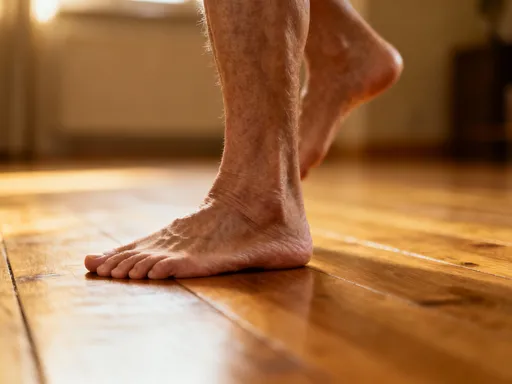
Beyond targeted exercises, everyday habits play a significant role in balance health. What we wear, how we sit, and how much we move all influence the body’s stability systems. One of the most overlooked factors is footwear. Constant use of supportive shoes, especially those with thick soles or elevated heels, can weaken the intrinsic muscles of the feet over time. These muscles are critical for balance, acting as sensors and stabilizers. Going barefoot at home, when safe, allows the feet to move naturally and strengthens these small but vital muscles.
Sedentary behavior is another major contributor to declining balance. Sitting for long periods, especially with legs crossed or tucked under, reduces circulation and stiffness in the hips and ankles. This limits range of motion and impairs the body’s ability to shift weight smoothly. Taking short breaks to stand, stretch, or walk helps maintain joint mobility. Simple habits like standing while talking on the phone or doing a few weight shifts while waiting for the kettle to boil can make a difference over time.
Excessive screen time also affects balance, not directly, but through posture and neck alignment. Looking down at phones or laptops for extended periods can lead to forward head posture, which disrupts the body’s center of gravity and strains the vestibular system. Regular posture checks—rolling shoulders back, lifting the chin slightly, and aligning the ears over the shoulders—help maintain proper alignment. Incorporating gentle neck stretches and shoulder rolls into daily routines supports better balance by improving overall body awareness.
Finally, joint stiffness, particularly in the ankles and hips, can impair balance. Limited ankle dorsiflexion—the ability to bend the foot upward—makes it harder to shift weight forward, increasing fall risk. Simple mobility drills, such as ankle circles or calf stretches, can improve flexibility. Hip openers, like seated figure-four stretches or standing leg swings, enhance range of motion. These small movements don’t take much time but contribute significantly to overall movement quality.
Building a Sustainable Routine (Without Adding Stress)
The biggest obstacle to improving balance isn’t ability—it’s consistency. Many people start with enthusiasm but struggle to maintain a routine, especially when life gets busy. The key to long-term success is designing a practice that fits seamlessly into daily life, not one that feels like an added burden. The good news is that balance training doesn’t require long workouts or special equipment. Five to ten minutes a day is enough to see meaningful progress, especially when done with focus.
One effective strategy is habit stacking—pairing balance exercises with existing routines. For example, practice single-leg stands while brushing your teeth—30 seconds on each foot covers the full two minutes. Use commercial breaks during TV time to do heel-to-toe walks across the living room. Do weight shifts while waiting for your coffee to brew. These micro-sessions add up without disrupting your schedule. Over time, they become automatic, like any other healthy habit.
Tracking progress can also boost motivation. You may not notice changes day to day, but after a few weeks, standing on one leg will feel steadier, or walking on uneven ground will feel more secure. Keep a simple log—marking days you practice or noting small wins, like standing up from a chair without using your hands. This helps reinforce the habit and provides encouragement during slower periods.
Flexibility is also important. There will be days when you’re tired, short on time, or dealing with joint stiffness. On those days, reduce the duration or simplify the exercises rather than skipping them entirely. Even 60 seconds of mindful standing is better than nothing. The goal is long-term adherence, not perfection. As life changes—through travel, illness, or seasonal shifts—adjust the routine accordingly. Balance training is not a race; it’s a lifelong practice that evolves with you.
Final Thoughts: Balance as a Lifelong Practice
Improving my balance didn’t just prevent another stumble—it changed how I move through the world. I stand taller, walk with more confidence, and feel more connected to my body. The benefits extend beyond physical stability; they’ve brought a quiet sense of control and reassurance in daily life. I no longer hesitate on stairs or worry about uneven sidewalks. That small investment of time has paid off in greater independence and peace of mind.
Better balance isn’t about achieving a perfect pose or mastering advanced moves. It’s about building resilience, one small step at a time. It’s a practice that grows with you, adapting to your needs and lifestyle. For women managing the demands of family, work, and self-care, it’s a form of self-investment that pays dividends in safety, strength, and confidence.
If you’ve ever dismissed balance training as unnecessary or too simple, consider this: your ability to move freely and safely is not guaranteed. It’s a skill that requires attention and care. Starting with just a few minutes a day, you can begin to rebuild that foundation. Listen to your body, progress at your own pace, and celebrate small improvements. And if you have underlying health concerns or a history of falls, consult a healthcare provider or physical therapist for personalized guidance. Balance isn’t just about staying upright—it’s about staying active, independent, and confident for years to come.