Bruges Unscripted: Where Every Cobblestone Tells an Art Story
You know that feeling when a city just gets you? Bruges did that to me. Wandering its canals felt like stepping into a living museum—every alley hummed with art, history, and quiet magic. I didn’t expect to fall this hard for a place so small. But here’s the truth: Bruges isn’t just pretty postcards. It’s artisan workshops, centuries-old frescoes, and street-corner musicians keeping Flemish soul alive. This is culture you don’t just see—you feel it. More than a destination, Bruges is an invitation to slow down, to notice the curve of a gable, the flicker of candlelight in a centuries-old chapel, the whisper of lace needles in a sunlit room. In a world of constant motion, Bruges offers something rare: stillness with purpose, beauty with depth.
First Impressions: A City Frozen in Time
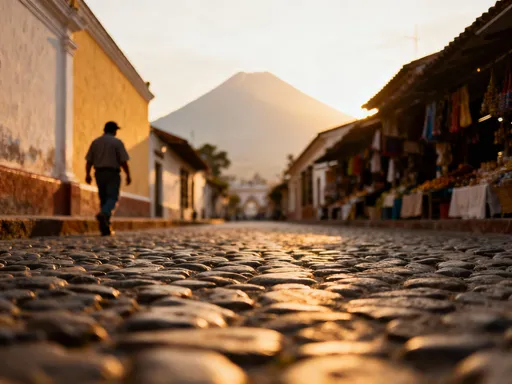
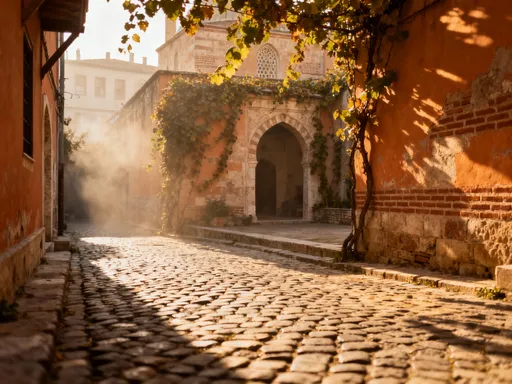
Arriving in Bruges by train from Brussels or Ghent, the transition feels almost cinematic. One moment you're surrounded by flat Belgian farmland and modern infrastructure; the next, the medieval skyline emerges—towers piercing the mist, canals cutting through emerald-green water like veins. The city rises gently from the landscape, not with grand fanfare but with quiet dignity. As you walk from the station toward the historic center, the rhythm of life shifts. The hum of traffic fades. Footsteps echo on ancient cobblestones, and the occasional clip-clop of a horse-drawn carriage adds a timeless cadence to the morning air.
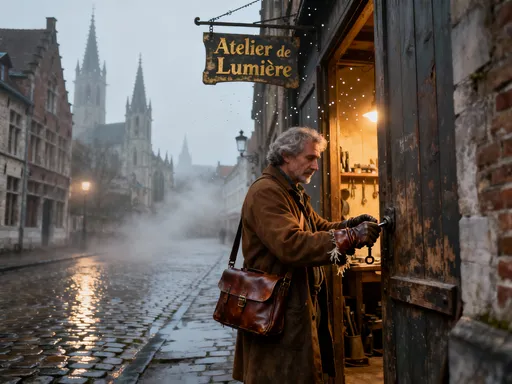
What strikes most about Bruges is its authenticity. Unlike some European cities that feel like curated experiences, Bruges lives and breathes. Children walk to school beneath arched brick gateways. Shopkeepers sweep wooden thresholds in front of centuries-old facades. The air carries the scent of fresh bread and damp stone. Mist often lingers in the early hours, wrapping the city in a soft, dreamlike haze. This isn’t a set for a period film—it’s real life, preserved through deliberate care and civic pride.
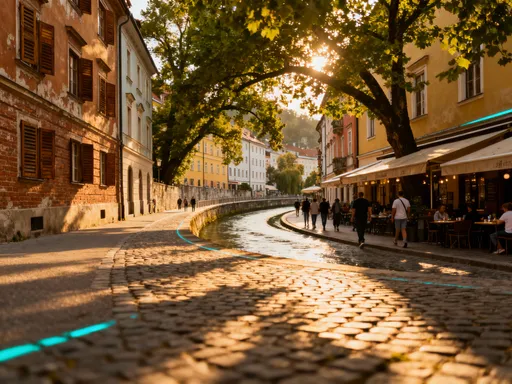
Bruges stands apart from other historic cities due to its remarkable preservation of medieval urban planning. The network of canals, originally built for trade in the 13th century, still defines the city’s layout. Narrow alleys branch off from main squares, leading to hidden courtyards and quiet footbridges. The city’s compact size—just over 13 square kilometers—makes it ideal for exploration on foot. Every turn offers a new perspective: a weathered statue tucked into a niche, a flower box overflowing with geraniums, a reflection of Gothic spires shimmering in still water.
The UNESCO World Heritage designation, awarded in 2000, has played a crucial role in maintaining Bruges’ integrity. Rather than turning the city into a sanitized museum, the designation supports sustainable tourism and responsible development. Strict building codes ensure that renovations respect historical materials and design. Modern interventions—such as discreet signage or underground utilities—are carefully managed to avoid disrupting the visual harmony. This balance allows Bruges to remain a living city, not a fossilized relic. Residents continue to inhabit centuries-old homes, and local businesses thrive within ancient storefronts, proving that heritage and modernity can coexist.
Gothic Canvas: Architecture as Art
In Bruges, architecture is not merely functional—it is an enduring form of artistic expression. The city’s skyline is a gallery of Gothic and Flemish Renaissance design, where every stone and spire tells a story of faith, power, and craftsmanship. At the heart of this architectural tapestry stands the Church of Our Lady, a soaring brick edifice that houses one of the most treasured works of Western art: Michelangelo’s Madonna and Child. Carved from Carrara marble around 1504, the sculpture is the only Michelangelo piece located outside Italy during his lifetime. Its presence in Bruges is a testament to the city’s historical wealth and cultural ambition. The delicate drapery, the serene expression of the Virgin, and the naturalistic pose of the Christ child reflect a humanist vision that transformed religious art in the Renaissance.
Nearby, St. Salvator’s Cathedral offers a different kind of architectural narrative. While its origins date back to the 10th century, the current structure is a layered masterpiece of Gothic construction with later Baroque additions. The west tower, completed in the 19th century, rises with neoclassical restraint, contrasting with the ornate interior. Gilded altars, painted ceilings, and stained-glass windows depicting biblical scenes create a space that feels both sacred and theatrical. The cathedral’s evolution mirrors Bruges itself—rooted in medieval foundations but open to artistic reinterpretation over time.
Perhaps the most iconic symbol of Bruges is the Belfry, a 83-meter tower that dominates the Markt Square. Built in the 13th century as a bell tower for the city’s cloth hall, it served both civic and defensive purposes. Its carillon, consisting of 47 bells, has rung for centuries to mark time, celebrate events, and warn of danger. Today, the chimes still play daily, their melodies drifting over rooftops and canals. Climbing the 366 steps to the top is no small feat, but the reward is unparalleled: a panoramic view of red-tiled roofs, winding waterways, and distant church spires. The Belfry is more than a tourist attraction—it is a living symbol of communal identity, resilience, and artistic endurance.
What makes Bruges’ architecture so powerful is not just its beauty but its continuity. Unlike cities where historic buildings are isolated as monuments, Bruges integrates them into daily life. The same guildhalls that once regulated trade now host cultural events. Medieval almshouses still provide housing for the elderly. Restoration projects employ traditional techniques—hand-cut stone, lime mortar, leaded glass—ensuring that repairs honor original craftsmanship. This commitment to authenticity allows visitors to experience history not as a distant memory, but as a living presence.
Museums with a Pulse: Where History Breathes
Bruges’ artistic legacy is not confined to its streets and churches—it is also safeguarded within its museums, where centuries of creativity are thoughtfully curated. The Groeningemuseum stands as the cornerstone of this cultural preservation. Housed in a 14th-century building that once served as a noble residence, the museum traces the evolution of Flemish art from the 15th century to the present. Its collection of Flemish Primitives is among the finest in the world, featuring masterpieces by Jan van Eyck, Hans Memling, and Gerard David. Van Eyck’s Madonna with Canon Joris van der Paele is a highlight, its meticulous detail—the texture of fur-lined robes, the glint in the canon’s spectacles—revealing a revolutionary approach to realism and light.
What sets the Groeningemuseum apart is its ability to balance scholarly depth with emotional resonance. Wall texts are informative but accessible, avoiding academic jargon. Lighting is carefully calibrated to protect delicate pigments while enhancing visual clarity. Temporary exhibitions often draw connections between historical works and contemporary issues, inviting visitors to see old art through modern eyes. For example, a recent exhibit explored how 15th-century depictions of nature reflect early environmental awareness, a subtle but powerful reminder that artistic observation has long been intertwined with ecological sensitivity.
Equally moving is the Memling in Saint John’s Hospital, a museum located within the preserved wing of a 12th-century charitable institution. Here, visitors walk the same corridors where patients once received care, now lined with works by Hans Memling, who served as the hospital’s official painter. His St. John Altarpiece and Shrine of St. Ursula blend religious devotion with human tenderness. The setting amplifies the art’s emotional weight—the quiet cloister, the soft light filtering through arched windows, the sense of centuries of prayer and healing. This integration of art and place underscores how creativity was once woven into the fabric of social welfare and spiritual life.
Not all museums in Bruges adhere to traditional formats. The Astrarium, formerly known as the Historium, takes a more immersive approach, using projections, scents, and soundscapes to recreate medieval Bruges. While some critics argue that such techniques verge on theatricality, the experience succeeds in engaging younger audiences and first-time visitors who might otherwise find static displays less compelling. The key lies in balance: the Astrarium does not replace historical accuracy but complements it, offering a gateway into deeper exploration. When done with integrity, modern storytelling methods can enhance, rather than dilute, cultural understanding.
Living Art: Craftsmanship in the Present
Art in Bruges is not confined to the past—it thrives in the hands of contemporary artisans who uphold centuries-old traditions with quiet dedication. Nowhere is this more evident than in the city’s chocolate ateliers. More than mere confectioners, these chocolatiers are alchemists of flavor and form. In workshops tucked behind unassuming storefronts, they temper cocoa butter by hand, sculpt truffles into delicate shapes, and infuse ganache with local ingredients like rosehip, elderflower, or aged beer. The process is meticulous, almost meditative. A single praline may pass through ten pairs of hands before it reaches the display case. This reverence for craft transforms chocolate from a treat into an art form—one that honors both Belgian heritage and individual creativity.
Equally emblematic of Bruges’ living artistry is its lace-making tradition. Once a cornerstone of the city’s economy, handmade lace is now a fragile cultural treasure. Only a handful of artisans still practice the craft, their fingers moving with hypnotic precision over bobbins and pillows. At the Lace Centre in the historic Begijnhof, visitors can observe elderly women creating intricate patterns—floral motifs, geometric lattices, religious symbols—stitched thread by thread. The center also offers workshops, allowing guests to try their hand at the craft. While few will master it, the experience fosters appreciation for the patience and skill involved. City-sponsored initiatives provide small grants to lace-makers, helping sustain their work in a market dominated by mass production.
Beyond these traditional crafts, Bruges nurtures a vibrant community of contemporary artists. In quiet side streets and converted warehouses, small galleries showcase paintings, sculptures, and mixed-media works inspired by the city’s legacy. Many artists engage in dialogue with the Old Masters, reinterpreting religious iconography or architectural forms through modern lenses. Some use digital tools to project animated frescoes onto ancient walls, creating ephemeral installations that honor the past while embracing innovation. Artist residencies, supported by the city’s cultural office, provide space and stipends for creators to live and work in Bruges for several months, fostering a dynamic exchange between local and international talent.
What unites these diverse practices is a shared commitment to craftsmanship. Whether shaping chocolate, weaving lace, or layering paint, these artists prioritize quality over speed, depth over spectacle. Their work resists the commodification that often accompanies tourism, offering instead intimate, authentic experiences. By sustaining these traditions, Bruges ensures that art is not a relic to be observed, but a practice to be lived.
Soundscape of the City: Music and Performance
The art of Bruges is not only seen—it is heard. The city’s acoustics, shaped by centuries of stone construction, create a natural resonance that enhances musical performance. In medieval churches like the Church of Our Lady and St. Salvator’s Cathedral, organ concerts fill vaulted naves with sound that seems to emerge from the walls themselves. The pipe organs, some dating back to the 18th century, produce rich, reverberant tones that linger in the air long after the final note. These concerts, often held in the late afternoon or evening, attract both locals and visitors seeking a moment of reflection. The music—whether Bach fugues or Flemish liturgical compositions—connects the present to a deep spiritual and artistic lineage.
Outside the churches, the city’s streets serve as open-air stages. Near the Markt Square and along the canals, street performers bring music into everyday life. Classical cellists play Vivaldi beneath arched bridges. Accordionists fill quiet courtyards with waltzes. Folk singers perform in Dutch, French, and English, their melodies drifting over the water. These performances are not intrusive—they are invitations to pause, to listen, to share in a fleeting moment of beauty. Many musicians are conservatory-trained, treating their street sets as both livelihood and artistic expression. The city regulates performance zones to prevent overcrowding, ensuring that music enhances rather than overwhelms the urban experience.
Seasonal festivals further enrich Bruges’ musical culture. The Bruges Concert Festival, held each spring, is one of Europe’s leading early music events. Featuring ensembles from across the continent, it specializes in historically informed performances using period instruments. The festival takes place in churches, cloisters, and private mansions, transforming historic spaces into intimate concert halls. Audiences often sit on wooden benches, surrounded by frescoes and candlelight, creating an atmosphere that feels both timeless and immediate. Other events, such as the Festival of Light in winter, combine music with projection art, illuminating facades with synchronized soundscapes that celebrate the city’s artistic heritage.
Public performance spaces are essential to Bruges’ cultural rhythm. They democratize art, making it accessible beyond museum walls or ticketed events. A child hearing a cello for the first time on a bridge, a couple pausing to watch a street violinist at dusk—these moments embody the city’s ethos: art as a shared, living experience. By supporting musicians through permits, infrastructure, and programming, Bruges ensures that its soundscape remains as rich as its visual one.
Art in the Everyday: Urban Design and Civic Identity
In Bruges, art is not limited to galleries and performances—it is embedded in the very design of the city. Thoughtful urban planning ensures that beauty is not an afterthought but a foundational principle. One of the most striking examples is the city’s approach to lighting. At night, soft golden lamps line the canals, casting gentle reflections on the water and highlighting the textures of brick and stone. Unlike cities that flood historic areas with harsh white light, Bruges uses low-intensity, warm-toned fixtures that enhance ambiance without obscuring detail. The result is a nocturnal landscape that feels safe, romantic, and deeply atmospheric.
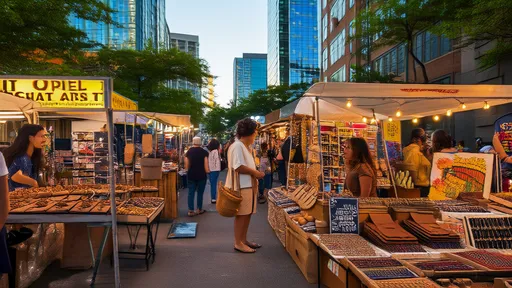
Public art is also integrated with subtlety and intention. Sculptures appear unexpectedly—a bronze hare crouched beside a footbridge, a mosaic of birds hidden in a cobblestone alley. These works are not grand monuments but quiet gestures, rewarding those who wander slowly and look closely. Some are contemporary interpretations of medieval themes, others are tributes to local legends. Their placement encourages discovery, turning a simple walk into a personal journey of observation. The city commissions many of these pieces through open calls, ensuring that artists from diverse backgrounds contribute to the urban fabric.
Equally important is what Bruges chooses not to display. Unlike many tourist destinations, the city limits commercial signage, advertising billboards, and neon lights. Storefronts maintain traditional lettering, often hand-painted. Chains are rare; most businesses are locally owned. This visual restraint protects the city’s aesthetic harmony, allowing architecture and nature to remain the focal points. It also fosters a sense of calm, reducing sensory overload and inviting contemplation. For visitors accustomed to urban clutter, Bruges feels refreshingly uncluttered—a place where the eye can rest and the mind can wander.
These design choices reflect a broader civic philosophy: that beauty matters, and that public space should serve both function and spirit. City policies regulate building heights, material choices, and signage to preserve coherence. Residents take pride in maintaining their homes and gardens, often participating in neighborhood beautification projects. This collective commitment ensures that art is not something visitors consume, but something everyone helps sustain. In Bruges, aesthetics are not elitist—they are a shared responsibility and a source of communal pride.
Beyond the Postcard: Authentic Encounters Off the Beaten Path
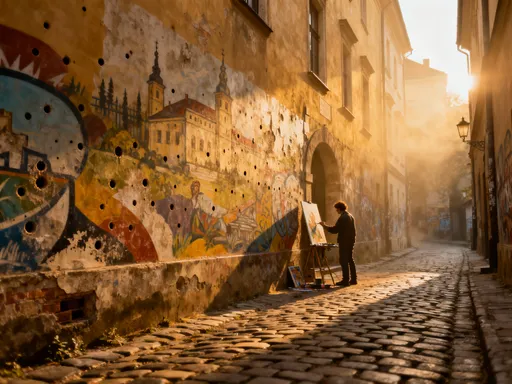
While the Markt Square and Belfry draw crowds, the soul of Bruges often reveals itself in quieter corners. One such place is the Bonifacius Bridge, a modest stone footbridge that offers one of the most photographed views in the city—but at dawn or dusk, it belongs to locals. Artists set up easels here, capturing the play of light on water. Elderly couples walk their dogs along the Dijver canal, where willow trees dip into the current. These moments are unscripted, unhurried, and deeply authentic. They remind visitors that Bruges is not a stage set, but a lived-in city with routines, rhythms, and residents who cherish their home.
Cafés tucked away from main thoroughfares offer another window into daily life. In places like ‘t Brugs Beertje, known for its extensive beer selection, or smaller tea houses near the Minnewater Park, artists gather to sketch, write, or simply observe. Sitting at a corner table with a coffee, you might notice someone quietly drawing the courtyard, their notebook filled with quick, expressive lines. Engaging with them—asking about their work, sharing a smile—can lead to meaningful exchanges. These interactions, though brief, create connections that transcend tourism. They affirm that art is not a product, but a practice shared across generations and cultures.
For travelers seeking depth, the key is intentionality. Visiting in the shoulder seasons—late spring or early autumn—reduces crowds and reveals a more relaxed pace. Walking without a map encourages serendipity. Slowing down allows space to notice details: the pattern of brickwork, the scent of blooming linden trees, the sound of a distant bell. When interacting with artisans, a respectful curiosity goes further than a transaction. Asking about their process, their training, their connection to tradition, honors their labor and deepens understanding. Responsible tourism, in this sense, is not about avoiding impact, but about making it positive.
Ultimately, supporting Bruges’ art story means choosing experiences that value sustainability over spectacle. It means buying lace from a local maker rather than a souvenir shop, attending a live concert instead of a virtual tour, staying in a family-run guesthouse. These choices help preserve the very qualities that make the city special. They ensure that Bruges remains not just a destination, but a living culture—one that continues to inspire, evolve, and welcome those who come with open eyes and open hearts.
Bruges isn’t frozen—it’s evolving, gently. Its art culture isn’t trapped in glass cases; it pulses through workshops, stones, and songs. To visit is not just to observe, but to participate in a centuries-old dialogue between past and present. The real magic? You don’t need to be an art expert to feel it. You just need to walk, look, and listen. And maybe, like me, leave a little piece of your heart between its cobbled lanes.