This Is Why Saint Petersburg’s Culture Scene Is Absolutely Unstoppable
You know that feeling when a city just surprises you? Saint Petersburg did that to me. I expected grand palaces and museums, sure—but the living culture? The street festivals, underground art shows, and midnight ballet under golden chandeliers? Mind-blowing. It’s not just history frozen in time; it’s a creative pulse that never stops. If you think Russia’s cultural heart beats only in Moscow, trust me—you’re missing the real magic. This northern gem on the Neva River is where art breathes, music echoes through canals, and tradition dances with innovation. Saint Petersburg isn’t preserved behind glass—it’s alive, evolving, and deeply felt by everyone who walks its cobblestone streets.
First Impressions: A City That Feels Like a Living Museum
Arriving in Saint Petersburg by the high-speed Sapsan train from Moscow sets the tone for what’s to come—a journey that blends modern efficiency with timeless elegance. The ride takes just over four hours, gliding smoothly through the Russian countryside before arriving at Moscow Station in the heart of the city. From there, a short metro or taxi ride delivers visitors directly into the embrace of a skyline defined by gilded domes, baroque facades, and waterways that crisscross like veins feeding the city’s artistic soul. There’s an immediate sense of arrival, not just in place but in era—a city that refuses to let go of its grandeur, yet moves with a contemporary rhythm.
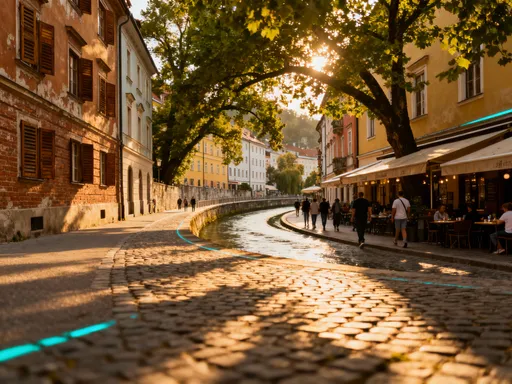
The visual impact of Saint Petersburg is unforgettable. Pastel-colored buildings—soft blues, mint greens, and pale yellows—line the embankments, their reflections shimmering on the Neva River like watercolor paintings come to life. The golden domes of the Church of the Savior on Spilled Blood catch the light at every turn, glowing even under overcast skies. In summer, the phenomenon known as the White Nights bathes the city in a perpetual twilight, where dusk never fully falls and streetlamps flicker on and off in confusion. It’s during these luminous evenings that the city feels most magical, as if time itself slows down to allow for deeper appreciation.
What sets Saint Petersburg apart is its unique blend of European sophistication and Russian emotional depth. Unlike Moscow’s imposing scale and bustling energy, Saint Petersburg unfolds like a carefully composed symphony—each bridge, monument, and alleyway contributing to a harmonious whole. The city was founded by Peter the Great in 1703 as a “window to the West,” and that vision still resonates. Yet, beneath its polished exterior lies a resilient spirit shaped by revolution, war, and rebirth. This duality—beauty and endurance—gives the city its soul. For travelers, especially those who appreciate culture in motion, Saint Petersburg offers more than sights; it offers a feeling.
The Hermitage After Dark: When Art Gets a Pulse
One of the most unforgettable cultural experiences in Saint Petersburg is visiting the State Hermitage Museum during its exclusive evening program, “Hermitage After Hours.” While millions come each year to walk its 330 rooms filled with masterpieces, few have the privilege of seeing it in near-silence, illuminated only by soft spotlights and candlelight. These after-hours tours are limited to small groups and require advance booking, but they offer something rare: intimacy with art on a human scale. Imagine standing alone before a Rembrandt self-portrait, the brushstrokes visible in the dim glow, or tracing the intricate carvings of a Rococo ceiling without a crowd pressing behind you.
The Winter Palace, home to the Hermitage, transforms after dark. By day, it’s a monument of imperial power; by night, it becomes something closer to a sacred space. The absence of crowds allows for contemplation. You begin to notice details—the texture of a Persian rug, the way light plays across a Fabergé egg, the quiet pride in a portrait of Catherine the Great. It’s not just viewing art; it’s conversing with history. The museum staff often enhance the experience with live performances—chamber music echoing through the Jordan Staircase, a soprano’s voice floating above the Malachite Room, or poets reciting verses inspired by the very walls around them.
This blending of visual art with live performance underscores a truth about Saint Petersburg: culture here is not static. It’s not enough to preserve masterpieces; they must be reawakened, reinterpreted, and shared in new ways. The Hermitage, one of the oldest and largest museums in the world, understands this deeply. Its evening programs are not gimmicks but invitations—to slow down, to listen, to feel the heartbeat of centuries-old creativity still pulsing through marble halls. For visitors, especially those who seek meaningful connection over checklist tourism, this is the kind of experience that lingers long after the trip ends.
White Nights Festival: Where the City Never Sleeps
If there’s one time of year that captures the essence of Saint Petersburg’s unstoppable cultural energy, it’s the annual White Nights Festival in June. During this period, the sun barely sets, and the city responds with a burst of artistic celebration that lasts from dusk to dawn. The festival centers around the Mariinsky Theatre, one of the world’s most revered opera and ballet institutions, which hosts all-night performances that draw audiences from across the globe. To attend an opera under a sky bathed in soft, silvery light is to witness art in perfect harmony with nature.
The programming during the White Nights is both grand and accessible. World-class soloists perform Tchaikovsky and Rachmaninoff in the ornate halls of the Mariinsky, while open-air concerts fill Palace Square with music that drifts across the Neva. Street performers, brass bands, and folk ensembles add to the festive atmosphere, turning the entire city into a stage. Locals picnic on embankments, children dance to accordion melodies, and couples stroll hand-in-hand along the canals, all under the glow of perpetual twilight. There’s a shared understanding that these nights are special—not just because of the light, but because of what the city chooses to do with it.
The climax of the festival is the Scarlet Sails celebration, a tradition that began in the 1960s and has since become a symbol of hope and new beginnings. Held on the weekend after graduation, it features a majestic ship adorned with red sails gliding down the Neva, accompanied by a symphony of fireworks, laser shows, and live music. Thousands gather along the riverbanks, their faces lit by explosions of color above. For many, it’s not just a spectacle but an emotional experience—a reminder of youth, dreams, and the power of collective joy. In that moment, Saint Petersburg feels infinite, its spirit uncontainable.
Hidden Creative Hubs: Beyond the Tourist Trail
While the grand institutions define Saint Petersburg’s cultural reputation, its true vitality lies in the spaces just off the beaten path—places where young artists, musicians, and designers keep tradition alive in unexpected ways. One of the most inspiring examples is Pushkinskaya-10, an artist-run cultural complex housed in a former school building near the Griboyedov Canal. What began in the late 1980s as an underground collective has grown into a thriving hub for experimental art, independent theater, and alternative music. The walls are covered in graffiti, the corridors buzz with creativity, and the air carries the scent of paint and coffee.
Inside Pushkinskaya-10, visitors might stumble upon a performance of avant-garde dance, a photography exhibit on Soviet memory, or a pop-up market selling handcrafted jewelry and prints. The space operates on principles of collaboration and freedom, offering studios to artists who might not otherwise have access to exhibition venues. It’s a place where rules are questioned, forms are broken, and new voices emerge. What’s remarkable is how these modern expressions coexist with reverence for the past—many works reference Pushkin, Akhmatova, or Shostakovich, not as distant icons but as living influences.
These grassroots spaces matter because they show that culture in Saint Petersburg is not merely inherited—it’s reinvented. While tourists flock to the Hermitage and the Mariinsky, a parallel creative economy thrives in basements, courtyards, and converted warehouses. Independent galleries like Loft Project ETAGI and Street Art Museum offer platforms for contemporary dialogue, while small music venues host jazz, rock, and folk acts that reflect the city’s evolving identity. For the discerning traveler, seeking out these places is not about avoiding crowds but about experiencing authenticity—seeing how art functions not as a product but as a necessity of daily life.
Ballet at the Source: A Night at the Vaganova Academy
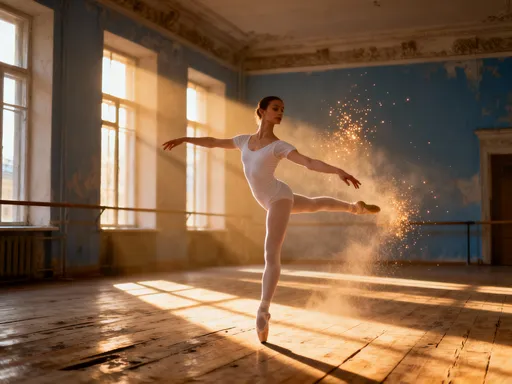
To witness ballet in Saint Petersburg is to see it in its spiritual home. The Vaganova Academy of Russian Ballet, founded in 1738, is the cradle of classical dance, training generations of dancers who would go on to grace the world’s greatest stages. Attending a student performance at the academy is a rare privilege—one that reveals not just technical perfection but deep emotional commitment. Even in rehearsal halls lit by fluorescent lights, the precision, grace, and intensity are breathtaking. Young dancers move with a discipline that borders on devotion, their bodies telling stories without words.
The Vaganova method, named after the legendary pedagogue Agrippina Vaganova, emphasizes harmony, expressiveness, and strength. It’s not just about high extensions or flawless pirouettes; it’s about conveying feeling through movement. Watching a student perform a variation from *Giselle* or *Swan Lake* is to see tradition carried forward with reverence and rigor. Parents, teachers, and guests sit in quiet admiration, knowing they are witnessing the continuation of a legacy that has shaped global dance.
What makes these performances so moving is their intimacy. Unlike the grand productions at the Mariinsky, where sets and costumes dazzle, the academy showcases the raw essence of ballet. There are no distractions—just the dancer, the music, and the space between them. For visitors, especially those who may associate ballet with distant, unapproachable art, this is a powerful reminder: in Saint Petersburg, ballet is not a performance for elite audiences. It’s a living heritage, passed from teacher to student, generation to generation, like a sacred trust. To see it up close is to understand why it remains central to the city’s identity.
Street Culture with Soul: Music, Murals, and Moments
The cultural heartbeat of Saint Petersburg isn’t confined to theaters and galleries—it spills into the streets, where music, art, and human connection create spontaneous moments of beauty. On Nevsky Prospekt, the city’s main avenue, it’s common to hear the warm, melancholic strains of an accordion drifting from a doorway or a trio of violinists playing Tchaikovsky beneath an archway. These aren’t staged performances for tips; many are simply musicians sharing their craft with passersby, feeding the city’s soul one note at a time.
Courtyard cafes in the historic center often host indie bands in the evenings, their melodies blending with the clink of glasses and laughter. These intimate venues, tucked behind unmarked doors, offer a different side of Saint Petersburg—one that’s relaxed, modern, and deeply creative. You might hear a folk-rock rendition of a Bulat Okudzhava song or an original ballad inspired by the White Nights. The audience, a mix of locals and curious travelers, listens with rapt attention, united by the universality of music.
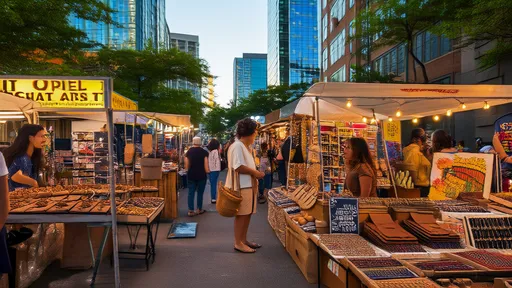
Urban art in Saint Petersburg carries a similar spirit. Unlike cities where street art rebels against history, here it often honors it. Murals depict poets like Anna Akhmatova, composers like Stravinsky, and thinkers like Dostoevsky, their faces gazing down from brick walls with quiet dignity. These works don’t deface; they commemorate. They remind residents and visitors alike of the intellectual and artistic giants who once walked these same streets. And in rare moments, if you linger long enough, you might be invited to join—a local offering a seat, sharing a story, or simply smiling in recognition of a shared appreciation. In a city often seen as formal and reserved, these small gestures reveal a deep warmth.
Planning Your Cultural Journey: When to Go, What to Book, How to Immerse
For those planning a cultural pilgrimage to Saint Petersburg, timing is everything. The ideal window for experiencing the city’s full artistic spectrum is from May through July, when the White Nights create a dreamlike atmosphere and festivals animate every corner. June, in particular, is unparalleled—the Scarlet Sails celebration, the Stars of the White Nights festival at the Mariinsky, and open-air performances make it the most vibrant month of the year. However, winter offers its own charm: fewer tourists, intimate theater performances, and a chance to experience the city’s coziness, with warm cafés and candlelit concerts providing refuge from the cold.
Preparation is key to accessing the best experiences. Tickets to the Mariinsky Theatre, especially for premieres, should be booked months in advance through the official website or trusted local vendors. Similarly, Hermitage After Hours tours fill up quickly and require registration through the museum’s event portal. For those interested in contemporary culture, apps like Afisha Saint Petersburg provide up-to-date listings for exhibitions, concerts, and pop-up events in real time. Engaging with local cultural calendars ensures you won’t miss hidden gems, from poetry readings in historic libraries to experimental dance in repurposed industrial spaces.
To truly immerse yourself, balance the iconic with the intimate. Spend a morning at the Hermitage, yes, but also set aside time to wander the side streets of Petrogradskaya Side or explore the galleries of Vasilyevsky Island. Attend a formal ballet, but also listen to street musicians on a quiet bridge. The richness of Saint Petersburg lies in this duality—its ability to honor grandeur while nurturing the small, personal moments that make art meaningful. For travelers, especially those who value depth over speed, this balance is the key to a transformative journey.
Conclusion: Saint Petersburg Isn’t Just Seen—It’s Felt
Saint Petersburg’s culture is not a performance staged for tourists. It is lived, breathed, and passed down through generations with quiet determination. From the hushed reverence of a midnight concert in the Hermitage to the joyful chaos of the Scarlet Sails festival, the city reveals itself as a place where art is not an extra but an essential part of life. It doesn’t ask to be admired from a distance; it invites participation, reflection, and emotional connection.
What makes this city unstoppable is not just its museums or monuments, but the people who keep its traditions alive while shaping new ones. It’s the student perfecting a pirouette at dawn, the poet reading in a dimly lit café, the muralist painting a composer’s portrait on a crumbling wall. These acts, large and small, sustain a cultural ecosystem that is as resilient as it is beautiful.
So go to Saint Petersburg not just to see masterpieces, but to feel where they are born. Let the music carry you, let the light linger on your skin, and let the city remind you that creativity, in all its forms, is a force that cannot be silenced. In a world that often moves too fast, Saint Petersburg stands as a testament to the enduring power of art—and the human spirit that fuels it.