Whispers Under the Arches: A Hidden Festival Journey in Arches National Park
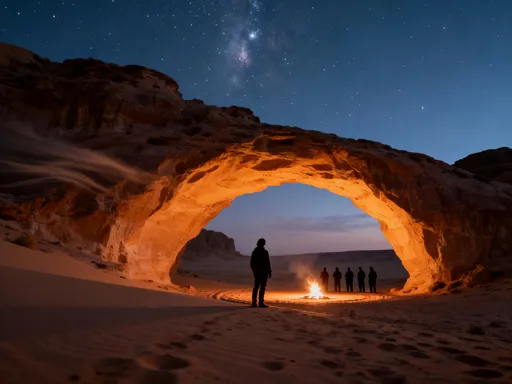
Have you ever stood beneath a glowing arch at dusk, surrounded by silence so deep it feels sacred? I didn’t expect to find celebration in the desert—but here, under Utah’s red rocks, locals honor the land with quiet rituals, stargazing circles, and seasonal gatherings most travelers never hear about. This isn’t your typical park experience. It’s a rare blend of nature and culture, where ancient rock formations meet living traditions. These moments are not staged for cameras or crowds, but shared in stillness, under open skies and whispering winds. For those willing to listen, Arches National Park offers more than trails and vistas—it offers a deeper connection, one that lingers long after the journey ends.
Discovering the Unseen Rhythms of Arches National Park
Most visitors arrive at Arches with a list: Delicate Arch at sunrise, the Windows Section at golden hour, Landscape Arch stretching across the horizon like a stone ribbon. These are iconic for good reason—the light dances on sandstone in ways that feel almost otherworldly. Yet beyond the postcard views lies a quieter, more intimate layer of the park’s identity. Here, the rhythm of life follows the sun, the seasons, and the silence. It’s in this subtle cadence that a different kind of celebration unfolds—one not marked by parades or fireworks, but by presence, reflection, and reverence.
Each year, without fanfare or formal promotion, small groups gather in the margins of the tourist season. These are not commercial events, nor are they listed on mainstream travel sites. Instead, they emerge from the community—local families, park rangers, artists, and Indigenous elders—who see the desert not as a backdrop, but as a living, breathing entity. Solstice gatherings take place at Balanced Rock, where attendees watch the sun align with ancient fissures in the stone. Cultural nights hosted by the park service blend storytelling with astronomy, inviting visitors to learn about the constellations as seen through the eyes of the Ute and Navajo peoples.
What makes these moments so powerful is their authenticity. There is no stage, no ticketing, no merchandise. Participants are asked only to be present, to listen, and to leave no trace. A mother from Salt Lake City once told me she brings her daughters every spring not for photos, but to “remember how to be still.” That stillness, she said, is the real gift of the desert. In a world that prizes noise and speed, Arches offers a rare counterbalance—a reminder that some of the most meaningful experiences are the ones that ask nothing of us but attention.
The Pulse of the Desert: Seasonal Gatherings That Honor the Land
The high desert of southeastern Utah is often misunderstood as barren, a place of absence. But those who live close to the land know better. The desert breathes in cycles—its pulse slow but steady, visible in the bloom of desert marigolds after rain, in the migration of raptors overhead, in the way the light shifts across the fins and spires at dawn. It is this rhythm that the seasonal gatherings near Arches seek to honor.
Each spring, as the temperature rises and the first wildflowers push through cracked earth, the *Desert Awakening* takes place. Organized informally through word of mouth and local bulletin boards, this morning event begins before sunrise. Guided by botanists and cultural stewards, small groups walk quietly through the Courthouse Towers area, learning to identify native plants like yucca, sagebrush, and Indian paintbrush. At designated stops, poets read original works inspired by the landscape. At one such gathering, a young woman recited a piece about her grandmother’s teachings—how each plant has a name, a purpose, and a story. The reading ended not with applause, but with silence, as if the desert itself was listening.
In autumn, the *Red Rock Reflections* offers a different kind of communion. Held on a single evening under a clear sky near the Windows Section, the event invites participants to bring journals and write under the stars. There is no agenda, no schedule—just space to reflect. Soft acoustic music, played on guitar and flute, drifts through the air, composed by local musicians who draw inspiration from the wind and the silence. One attendee, a retired teacher from Colorado, shared that she returns every year because “it’s the only time I feel truly grounded.” For three hours, the group sits together, not speaking, simply being. When the event ends, everyone collects their belongings, ensures no trace is left, and departs in quiet.
These gatherings are not about spectacle. They are about reciprocity—giving back attention, respect, and gratitude to a landscape that gives so much. They are also a quiet act of resistance against the pressures of over-tourism. While the park sees over a million visitors annually, these events remain small, intimate, and unadvertised. Their power lies not in scale, but in depth. They remind us that celebration need not be loud to be meaningful, and that the most profound connections are often the quietest.
Beyond the Trail: Where Culture Meets Canyon
It’s easy to reduce a national park to a checklist: seen, photographed, conquered. But in Arches, the true depth lies not in ticking off landmarks, but in stepping off the path—figuratively, if not literally—into the spaces between the hikes, the moments between breaths. It’s here that culture and canyon converge, where the land is not just observed, but understood.
The Moab Museum, though modest in size, plays a vital role in this bridge. Several times a year, it hosts *Desert Dialogues*—evening events that bring together Indigenous knowledge keepers, geologists, and local artists for conversations about the region’s past, present, and future. These are not lectures, but dialogues. One evening, I listened as a Ute elder spoke about the spiritual significance of Delicate Arch, not as a tourist attraction, but as a place of prayer and vision quests. Beside him, a geologist explained the 60-million-year process that shaped the arch, layer by layer. The conversation did not seek to reconcile science and tradition, but to show how both ways of knowing deepen our appreciation of the same stone.
Another transformative experience took place at the base of Double Arch. As the sun dipped below the horizon, casting long shadows across the sand, a small group gathered at the invitation of a Navajo storyteller. There were no chairs, no microphones—just a circle of people sitting on the rock, wrapped in jackets against the cooling air. The elder began to speak in both Navajo and English, sharing a creation story in which the arches were formed by the hands of Spider Woman, who wove the land into being. The wind picked up, rustling the pages of someone’s journal, and for a moment, it felt as if the story was not just being told, but being lived.
These moments transform the act of travel. They shift the traveler from observer to participant, from consumer to guest. They ask us to consider: What does it mean to stand in a place that has been sacred for thousands of years? How do we honor that without claiming it? The answer, as many locals suggest, is simple: listen more than you speak, take only photographs, and leave only respect. In doing so, we become temporary stewards of a landscape that belongs to no one and everyone at once.
Planning Your Visit: Timing, Access, and Etiquette
To experience these hidden gatherings, timing and preparation are essential. Unlike major festivals with online ticketing and social media campaigns, these events are often announced only weeks in advance, shared through local channels such as the Moab Information Center, the park’s visitor bulletin board, or community newsletters. Staying in Moab, the closest town to the park, significantly increases your chances of learning about them. Many residents are happy to share information, but only with those who approach with genuine interest, not entitlement.
The best times to visit are during the shoulder seasons—late March to early May and September to October—when temperatures are mild and crowds are smaller. Solstice and equinox dates are particularly significant, as many gatherings align with these celestial events. Full moon nights also draw quiet groups who come to walk the trails under natural light, often with red-filtered flashlights to preserve night vision and minimize disruption to wildlife.
When attending any event, etiquette is paramount. These are not performances; they are shared moments of reverence. Arrive early to find a respectful distance from the group. Keep your voice low, your phone on silent, and your presence unobtrusive. If food or drink is shared, wait to be invited before partaking. Most importantly, adhere strictly to Leave No Trace principles: pack out everything you bring in, stay on designated paths, and avoid touching rock art or fragile desert crusts.
What to pack? A journal is highly recommended—many gatherings encourage reflection and writing. Bring warm layers, even in summer, as desert nights can be surprisingly cold. A red-light headlamp, water bottle, and sturdy walking shoes are essentials. And perhaps most importantly, bring patience. These events do not follow strict schedules. They unfold in the rhythm of the land, which means waiting, listening, and being open to what arises. Come not to take, but to receive.
Voices from the Community: Why These Celebrations Matter
Behind every gathering is a community that values continuity over convenience, reverence over revenue. I spoke with Sarah Williams, a third-generation resident of Moab and a volunteer naturalist with the National Park Service. “We’re not throwing parties,” she said, sipping tea on her porch as the red cliffs glowed in the evening light. “We’re remembering who we are. This land raised my grandparents, my parents, and now my children. These gatherings are how we keep that connection alive.”
For Sarah and others like her, these events are not just cultural traditions—they are acts of resilience. Moab has seen explosive growth in tourism, with traffic congestion, overcrowded trails, and environmental strain becoming increasingly common. The quiet gatherings serve as a counterbalance, a way to reclaim the land not through exclusion, but through deeper engagement. “When people come to a stargazing circle or a storytelling night,” she explained, “they’re not just seeing the park—they’re feeling it. And when you feel something, you’re more likely to protect it.”
I also met James Redtail, a Navajo artist and cultural educator who leads occasional talks at the park. “Our stories are not entertainment,” he said gently. “They are teachings. When I share a creation story under an arch, I’m not performing. I’m offering a way of seeing.” He emphasized that these moments are not about converting visitors to any belief system, but about expanding their understanding. “The land remembers. It knows who has walked here with respect, and who has taken without giving back.”
For younger generations, these gatherings are a way to inherit more than history—they inherit responsibility. At a recent youth-led journaling event, a 16-year-old named Emily shared her poem about watching the sunrise at Delicate Arch with her grandfather. “He taught me to say thank you to the land,” she read. “Not because it needs it, but because we do.” Her words were met with quiet nods. In that moment, tradition was not being preserved—it was being lived.
The Quiet Revolution: How Small Gatherings Protect the Park
It may seem paradoxical that the smallest events can have the largest impact. Yet research supports what many in Moab already know: emotional connection to a place drives conservation behavior. A 2022 study published in the *Journal of Environmental Psychology* found that participants in place-based rituals—such as guided meditations in nature or seasonal ceremonies—were 40% more likely to engage in pro-environmental actions, including trail maintenance, donations to conservation groups, and advocacy for land protection.
At Arches, park rangers have observed this shift firsthand. “We’ve noticed that people who attend cultural events are more mindful on the trails,” said Ranger Linda Cho, who has worked in the park for over a decade. “They’re less likely to stray off-path, more likely to pick up litter, and often ask how they can help.” These behaviors, while small, add up. In a fragile ecosystem where a single footstep on cryptobiotic soil can take decades to heal, mindfulness is not just a virtue—it’s a necessity.
Moreover, these gatherings foster a sense of shared ownership. They remind visitors that national parks are not theme parks, but protected landscapes entrusted to all. When someone writes in their journal under the stars, or listens to a story beneath an arch, they are not just passing through—they are becoming part of the land’s ongoing story. This emotional investment translates into real-world action. Since 2020, donations to the Arches Natural History Association have increased by 25%, with many donors citing cultural events as their inspiration.
In this way, the quiet gatherings are not just spiritual or cultural—they are ecological. They are a form of stewardship disguised as celebration. They teach that protection does not always require protest or policy; sometimes, it begins with silence, with presence, with the simple act of showing up and paying attention.
Carrying the Spirit Forward: A Traveler’s Invitation
You do not need to be born here to belong. You do not need to speak the language or know the stories by heart. All you need is a willingness to listen, to be still, and to approach the land with humility. That evening, as I walked back to my campsite after a stargazing circle, a ranger smiled and said, “Take the feeling, not the rocks.” It was a simple phrase, but it carried weight. In a place where people have carved their names into sandstone and pocketed pieces of ancient rock, it was a quiet plea for reverence.
This is the heart of the hidden festivals of Arches—not spectacle, but spirit. They invite us to slow down, to trade checklists for curiosity, and to find joy not in possession, but in presence. They remind us that travel at its best is not about how many places we see, but how deeply we see them.
As you plan your journey, consider this: instead of rushing to the next viewpoint, pause. Sit on the rock. Feel the sun on your face. Listen to the wind. Let the silence speak. You may not hear music or applause, but you might hear something more profound—the whisper of the arches, the breath of the desert, the quiet call to remember that we are not separate from nature, but part of it.
The true festival is not on the calendar. It is in the moment you realize you are not just visiting a place, but being welcomed by it. And when you leave, you carry not souvenirs, but a quiet knowing—that for a brief, beautiful moment, you belonged.