Lost in the Colors of San José: Where Architecture Feels Alive
Walking through San José, Costa Rica, I didn’t expect to fall in love with buildings. But here, every corner reveals something bold—vibrant facades, colonial balconies whispering history, and modern designs that pulse with creativity. This isn’t just a city passing through time; it’s one dancing with it. The architecture isn’t background noise—it’s the heartbeat. You feel it in the tiled floors, see it in the ironwork, and sense it in the way old and new stand side by side, unafraid. It’s a rhythm felt in the soles of your shoes and the tilt of your gaze upward, where rooftops meet sky in a celebration of color and craft.
First Impressions: Stepping into a City That Speaks Through Stone and Paint
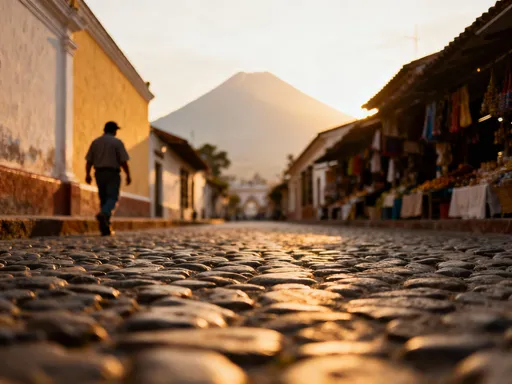
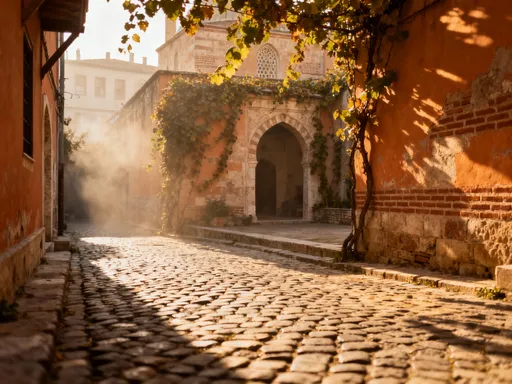
For many travelers, San José is the necessary stopover before heading to beaches or cloud forests. Yet those who pause discover a city with a quiet but undeniable presence. The capital doesn’t announce itself with towering skyscrapers or grand monuments. Instead, it unfolds gradually, revealing layers of texture and tone. The moment you step onto its sidewalks, the city speaks—not in loud declarations, but in subtle gestures. A cobblestone street curves beneath your feet. A row of buildings in ochre, turquoise, and terracotta rises like a mural come to life. These are not accidental colors; they are expressions of identity, resilience, and warmth.
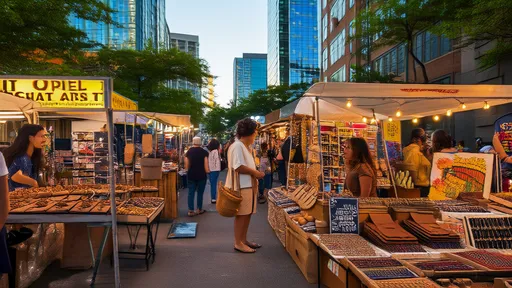
What sets San José apart is how architecture blends into daily life. It doesn’t live behind velvet ropes or glass cases. You sip coffee beneath a wrought-iron awning that has shaded generations. You browse handmade crafts in a market housed under vaulted ceilings older than the republic itself. The Central Market, a bustling labyrinth of stalls, occupies a building from the late 19th century, where thick stone walls and high windows create a natural climate control system. Here, commerce thrives not despite history, but because of it. The city’s buildings are not relics—they are rooms in a living home.
Even transportation infrastructure carries character. Bus stops are often framed by decorative tiles or painted masonry. Traffic circles are softened by greenery and small fountains, their edges lined with low buildings that invite lingering rather than rushing. This is urban design with a human scale, where function doesn’t erase beauty. Unlike modern cities that prioritize speed and efficiency, San José maintains a dialogue between practicality and poetry. The result is a place that feels navigable, intimate, and deeply welcoming.
Colonial Roots: When Spanish Elegance Met Tropical Light
The architectural soul of San José was shaped in the 18th and 19th centuries, during a time when Spanish colonial influence merged with tropical realities. The city’s early builders understood that design must respond to climate. Thick adobe walls absorbed heat during the day and released it slowly at night, creating a natural cooling effect long before electricity. High ceilings allowed hot air to rise, while large windows and cross-ventilation invited breezes to flow freely. These were not just aesthetic choices—they were intelligent adaptations to life under the Central American sun.
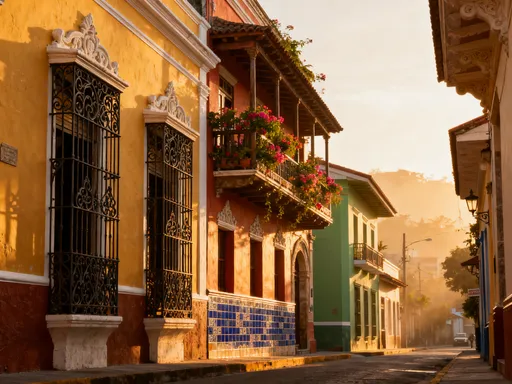
Balconies, a defining feature of colonial architecture, served both practical and social purposes. Elevated above street level, they offered shade and protection from rain, but they were also spaces of connection. Families gathered there in the late afternoons, watching street life unfold, greeting neighbors, and sharing stories. The iron railings—often hand-forged—combined security with elegance, their scrolls and flourishes reflecting European influences reinterpreted in a new world. Today, these balconies remain active, adorned with potted plants and laundry lines, blending tradition with everyday use.
Another hallmark of colonial design is the central courtyard, or *patio interior*. Found in many older homes, this private outdoor space provided light, ventilation, and a quiet retreat from the city’s bustle. Courtyards were often tiled, planted with tropical greenery, and centered around a fountain or sculpture. They created microclimates within homes, offering coolness and calm. In neighborhoods like Barrio Amón and Barrio Otoya, restored colonial houses showcase these features with care. Wooden shutters, carved door frames, and stained glass windows speak of craftsmanship passed down through generations.
Barrio Amón, once home to wealthy coffee barons, is now a preserved district where past and present coexist. Walking its tree-lined streets feels like stepping into a living archive. Homes with peeling paint and restored facades stand side by side, each telling a different chapter of the city’s story. The neighborhood’s charm lies in its authenticity—there is no forced gentrification, no theme-park imitation. These buildings are lived in, loved, and maintained with respect. They remind us that history doesn’t have to be frozen to be honored.
Republican Era Glamour: The Boom of Brick, Tile, and Detail
By the late 1800s, Costa Rica’s coffee industry brought wealth and global connections, transforming San José into a refined capital. This era, known as the Republican period, marked a shift in architectural ambition. Buildings became more elaborate, reflecting both prosperity and cultural confidence. The style was neither purely colonial nor fully European, but a unique blend that embraced ornamentation without losing local identity.
One of the most striking features of Republican-era architecture is the use of decorative brickwork. Facades were no longer plain surfaces but canvases of pattern and texture. Bricks were laid in intricate designs—diamonds, zigzags, and floral motifs—creating visual rhythm across building fronts. Windows became larger and more symmetrical, often framed with stucco moldings or ceramic tiles. The use of *azulejos*, imported from Spain and Portugal, added both color and prestige. These glazed tiles, typically in blue, white, or green, adorned entryways, stairwells, and exterior walls, turning functional spaces into works of art.
Neighborhoods like Barrio Escalante and parts of downtown San José preserve this legacy. Here, two- and three-story homes rise with quiet dignity. Cast-iron railings, often imported from Europe, guard balconies with delicate precision. Arched doorways and ornamental cornices suggest a city that valued beauty as much as utility. These buildings were not just homes—they were statements. To own a house with imported tiles or hand-carved woodwork was to say, “We are connected, we are cultured, we belong to the world.”
The Republican style also reflected a growing sense of national pride. As Costa Rica established itself as a stable democracy with a strong education system, architecture became a way to express that identity. Public buildings from this era—schools, post offices, and administrative offices—shared the same attention to detail. Even modest structures carried a sense of dignity. This was not architecture for spectacle, but for civic life. It said that every citizen deserved to walk past beauty, to work in spaces that inspired pride.
Art Nouveau and Eclectic Flair: When Europe’s Trends Found a Tropical Home
In the early 20th century, global artistic movements reached San José, carried by trade, travel, and cultural exchange. Art Nouveau, with its organic lines and floral motifs, found unexpected expression in the tropics. Though rare, surviving examples reveal a city open to innovation. Old bank buildings, private residences, and cultural institutions from this period feature flowing ironwork, asymmetrical facades, and stained glass with tropical themes. Vines, birds, and local flowers replace European lilies and peacocks, showing how global styles were adapted, not copied.
One of the most iconic examples of this fusion is the area surrounding the National Theater, completed in 1897. While the theater itself is neoclassical, the buildings around it absorbed eclectic influences. Facades combine Gothic pointed arches with Baroque scrollwork and Renaissance symmetry, resulting in a joyful unpredictability. A column might twist like a palm trunk; a window frame might bloom with metal leaves. These designs reflect a city curious about the world, eager to learn, but unwilling to lose its own voice.
The eclectic movement was not about strict adherence to any single style. Instead, it celebrated variety. Architects mixed elements freely, creating buildings that felt playful and personal. This was architecture as conversation—a dialogue between continents, centuries, and cultures. In Barrio Otoya and parts of downtown, you can still find homes where a French balcony meets a Spanish tile roof and a Caribbean shutter. These combinations are not mistakes—they are testaments to a cosmopolitan spirit grounded in local life.
What makes these buildings special is how they integrate with their environment. Unlike in colder climates where Art Nouveau was often enclosed and ornate, in San José, the style breathes. Open layouts, large windows, and outdoor spaces allow the architecture to interact with light, rain, and wind. Stained glass casts colored patterns on tiled floors only at certain times of day. Iron railings develop a soft patina from humidity, adding character over time. This is not fragile beauty—it is resilient, evolving, alive.
Modern Shifts: Concrete, Culture, and the Search for Identity
The mid-20th century brought rapid urbanization and new construction methods. Concrete became the dominant material, and functionalist design—simple, boxy, efficient—took hold. Many buildings from this era prioritize utility over ornament, reflecting the needs of a growing city. While some structures feel impersonal, others demonstrate how modernism can coexist with cultural sensitivity.
One of the most successful examples of this balance is the National Museum of Costa Rica, housed in a former military barracks. The original building, constructed in the 1940s, was repurposed with care. Its thick concrete walls and open courtyards were preserved, while new exhibition spaces were added with minimal visual disruption. The result is a museum that honors both history and innovation. Visitors walk through military arches into modern galleries, experiencing time as a continuum rather than a break.
Contemporary architecture in San José increasingly embraces sustainability. New cultural centers, university buildings, and public spaces use natural light, ventilation, and green materials. Architects are rediscovering passive cooling techniques from colonial times, combining them with solar panels and rainwater systems. The goal is not to reject modernity, but to adapt it to local conditions. This thoughtful approach suggests a maturing architectural identity—one that values progress without erasing the past.
Yet challenges remain. As the city grows, there is pressure to replace older buildings with high-rises or generic commercial structures. Some historic facades have been lost to neglect or redevelopment. However, there are also encouraging signs. Preservation efforts in neighborhoods like Barrio Amón have gained momentum. Young architects are studying traditional techniques, finding ways to incorporate them into new designs. The conversation around urban development is shifting—from mere expansion to thoughtful evolution.
Hidden Gems: Offbeat Spots Where Design Shines Quietly
Beyond the well-known landmarks, San José hides architectural treasures in plain sight. These are not always the buildings with plaques or guided tours, but the ones that reveal themselves slowly—to those who walk slowly, look closely, and listen. A converted mansion in Barrio Aranjuez now serves as a boutique hotel, its courtyard transformed into a garden lounge. Original wood beams and tiled floors remain, blending history with comfort. Guests don’t just stay there—they experience a way of living that values beauty in the everyday.
In San Pedro, near the University of Costa Rica, community centers and small galleries occupy repurposed homes. One such space features a mural made entirely of ceramic tiles, stretching across an entire wall. The artwork depicts local flora and historical figures, turning architecture into storytelling. These projects show how design can serve both function and inspiration. They are not grand gestures, but quiet acts of care—proof that beauty matters, even in ordinary places.
Walking tours in lesser-known neighborhoods reveal layers often missed by tourists. In Barrio Amón, a narrow alley might open onto a hidden garden. In Escalante, a café spills onto a sidewalk shaded by a century-old awning. These moments are not staged—they are part of daily life. Locals sit outside, reading newspapers or sipping coffee, surrounded by architecture that feels familiar, not foreign. This is the true strength of San José’s built environment: it belongs to the people.
Even small details carry meaning. A hand-painted number on a door, a mosaic step, a gate shaped like a coffee vine—each is a quiet declaration of identity. These elements are not mass-produced; they are handmade, personal, rooted in place. They remind us that architecture is not just about shelter, but about belonging.
Experiencing Architecture: How to See San José with Fresh Eyes
You don’t need an architecture degree to appreciate San José’s built beauty. What you need is time, attention, and a willingness to look up. Most visitors keep their eyes on the ground, focused on navigation. But the magic of this city lives above eye level—in the curve of a wrought-iron railing, the pattern of a floor tile, the way light filters through a stained-glass transom.
Start with slow walking. Choose a neighborhood—Barrio Amón, Escalante, or the downtown core—and explore on foot. Let yourself get slightly lost. Turn down side streets. Notice how buildings change as you move from one block to the next. Pause often. Take photos, but also put the camera away. Let your eyes adjust to detail. See how paint peels in layers, revealing decades of color beneath. Watch how vines climb old walls, merging nature and structure.
Visit the Central Market not just for souvenirs, but for architecture. Stand inside and look up. Notice the iron trusses that support the roof, the skylights that flood the space with light. Observe how vendors arrange their stalls within this historic shell, creating a living ecosystem of commerce and culture. Talk to shopkeepers—they often know the history of the building, or at least the stories passed down through years of work.
Guided walking tours, offered by local cultural organizations, can deepen your understanding. Guides share insights about materials, styles, and preservation efforts. They point out features you might miss—a hidden inscription, a restored cornice, a doorway with symbolic carvings. These tours are not lectures; they are conversations. They connect you not just to buildings, but to the people who care for them.
Finally, remember that architecture in San José is not meant to be observed from a distance. It is meant to be lived in, touched, used. Sit on a public bench shaded by a historic awning. Order a drink at a café with a tiled floor. Let yourself be part of the scene. When you do, you’ll realize that the city’s buildings are not just structures—they are hosts, welcoming you into their long and colorful story.
Why San José’s Buildings Stay With You
San José does not impress with scale or spectacle. It wins hearts through intimacy and authenticity. Its architecture doesn’t shout; it hums. It doesn’t demand attention; it earns it, one detail at a time. The power of this city lies in its ability to make beauty ordinary—woven into markets, homes, and sidewalks. A painted door, a tiled step, a balcony with blooming geraniums—these are not exceptions. They are the rule.
What stays with visitors is not a single monument, but a feeling. The sense that a city can grow without losing its soul. That modern life and historical depth can coexist. That buildings can be functional and joyful at the same time. In a world where so many urban centers look the same—glass towers, chain stores, uniform lighting—San José offers an alternative. It proves that identity can be built not just with steel and glass, but with color, craft, and care.
More than that, the architecture of San José reflects a way of living. It values slowness, connection, and attention to detail. It invites you to look closely, to appreciate the handmade, to find wonder in the everyday. It reminds us that beauty is not a luxury—it is a necessity. And sometimes, the most unforgettable journeys aren’t across continents, but across a single, colorful street, where every building has a story, and every story is still being lived.