Uncovering Timor-Leste’s Soul: Where Culture Lives in Every Corner
You know what? I never expected to feel so connected to a place I knew so little about. Stepping into Dili, the capital of Timor-Leste, was like flipping open a hidden chapter of Southeast Asia—one filled with raw beauty, quiet resilience, and culture pulsing through every street, market, and churchyard. This isn’t just travel; it’s real, unfiltered human experience. If you’re craving authenticity, Dili’s cultural heartbeat will absolutely get to you. Far from the well-trodden paths of Bali or Bangkok, this small island nation at the edge of the Indonesian archipelago offers something increasingly rare: a destination where tradition isn’t preserved behind glass but lives and breathes in everyday life. Here, culture is not a performance—it’s a way of being.
First Impressions: Dili’s Quiet Charm
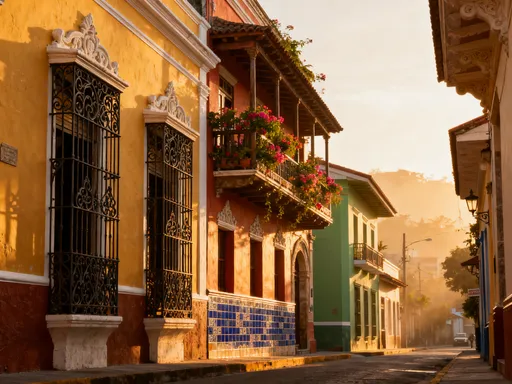
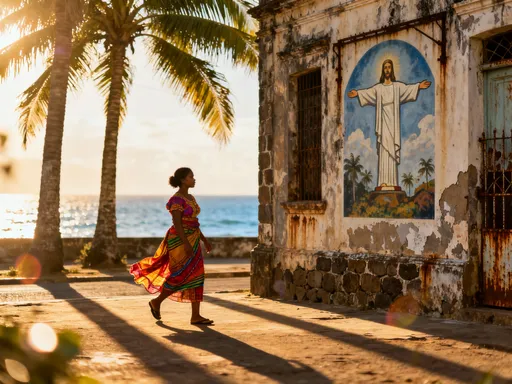
Arriving in Dili, one is immediately struck by its understated grace. There are no towering skyscrapers, no blaring billboards, no chaotic traffic jams. Instead, the city unfolds at a gentle pace, shaped by history, faith, and the rhythm of coastal life. The morning light spills over the Bay of Dili, casting a golden shimmer on the calm waters near Comoro Beach, where fishermen mend their nets and children walk to school along the palm-lined roads. Colonial-era buildings with faded pastel facades stand beside modern government offices, a quiet testament to the layers of influence that have shaped this nation—Portuguese, Indonesian, and, most importantly, Timorese.
What sets Dili apart is its authenticity. Unlike more commercialized capitals in the region, there’s no effort to cater to tourist expectations. Life here is lived for the people who call it home, not for visitors passing through. You’ll hear Tetum spoken in markets, smell freshly baked kakulu—sweet banana cakes wrapped in banana leaves—wafting from roadside stalls, and feel the warmth of a greeting that comes from genuine curiosity, not obligation. Church bells ring every morning, a sound that seems to slow time rather than mark it. This is a city that invites you to pause, to listen, to observe.
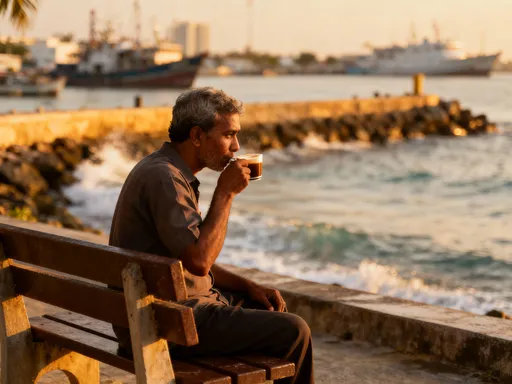
For travelers seeking meaning over spectacle, Dili offers a rare gift: the chance to witness culture in its natural state. The pace is slow, but the depth is profound. Whether you’re sipping strong local coffee at a sidewalk kiosk or watching elders gather under mango trees to share stories, you’re not observing a curated experience—you’re stepping into the quiet pulse of daily life. It’s this sincerity that makes Dili not just memorable, but transformative.
The Heartbeat of Heritage: Cristo Rei and Its Story
Rising above the coastline on a grassy hill, the Cristo Rei statue is one of Dili’s most recognizable landmarks. At first glance, it resembles its famous cousin in Rio de Janeiro, but its meaning here runs much deeper than symbolism. This statue, gifted by Indonesia in the 1990s, has been reclaimed by the Timorese people as a sign of peace, resilience, and spiritual endurance. Standing with arms outstretched over the city, Cristo Rei watches over a nation that has known immense suffering—and emerged with unwavering faith.
The journey to the statue is as meaningful as the destination. Visitors can walk along a winding path lined with eucalyptus trees, their scent filling the air with a clean, medicinal freshness. Along the way, small shrines mark the Stations of the Cross, used during religious processions. As you climb, the sounds of the city fade, replaced by birdsong and the rustle of leaves. When you reach the top, the view is breathtaking: the deep blue of the Savu Sea stretches to the horizon, while Dili spreads out below, a patchwork of red-tiled roofs, open plazas, and distant mountains.
But the true power of Cristo Rei lies not in the vista, but in what it represents. For many Timorese, this figure is more than a religious icon—it’s a silent witness to history. During the struggle for independence, this hillside offered solitude and reflection for those seeking strength. Today, it remains a place of pilgrimage, not only for the devout but for anyone seeking perspective. Families come on weekends, couples pause for quiet moments, and travelers stand in silence, feeling the weight of a nation’s journey. Here, culture and faith are inseparable, each reinforcing the other in quiet, enduring ways.
Sacred Grounds: The Role of Churches in Daily Life
In Dili, churches are not merely places of worship—they are the heartbeats of community life. From the grand Immaculate Conception Cathedral in the city center to the small parish churches tucked into quiet neighborhoods, these spaces serve as anchors of stability, connection, and continuity. Mass is often packed, not just on Sundays but during feast days and holy weeks, when the faithful gather in full force. But beyond religious services, churches host youth groups, women’s cooperatives, literacy programs, and support networks for the elderly and vulnerable.
Catholicism has been deeply woven into Timorese identity, especially during the decades of occupation when the Church provided shelter, advocacy, and moral leadership. Today, it continues to play a vital role in preserving cultural values and offering guidance in a rapidly changing world. The architecture of these churches reflects this blend of tradition and resilience—some built with simple concrete, others adorned with hand-painted murals depicting local saints and biblical scenes with Timorese faces.
Speaking with local parishioners—names withheld out of respect—reveals deeply personal connections to these spaces. One woman shared how her grandmother taught her prayers in Tetum, passing down not just faith but language and identity. A young man spoke of finding strength in the Church after losing family members during the conflict years. These stories are not unique; they are part of a collective memory that lives within these walls. For visitors, attending a Mass in Dili is not just an act of observation—it’s an invitation to witness how spirituality sustains a people.
The music alone is unforgettable: choirs singing in rich harmonies, drums echoing through open doors, children clapping along to hymns they’ve known since infancy. There’s no separation between the sacred and the everyday. Faith is lived, not performed. And in a world where tradition often feels fragile, Dili’s churches stand as living testaments to cultural endurance.
Living Traditions: Tais Markets and Craft as Identity
No visit to Dili is complete without encountering tais, the handwoven textiles that are among the nation’s most treasured cultural expressions. Found in markets like Mercado Municipal, these vibrant cloths are more than decorative items—they are visual stories, each pattern carrying meaning tied to clan, region, history, and belief. A red stripe might symbolize struggle and sacrifice, while a diamond motif could represent ancestral protection. The colors, threads, and designs are carefully chosen, often following traditions passed down through generations of women weavers.
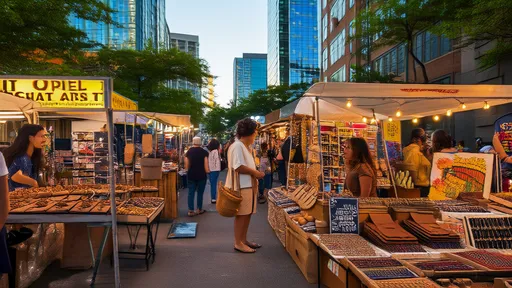
Walking through a tais market is a sensory delight. Bolts of fabric hang in bright cascades—deep indigo, sunlit yellow, earthy brown, and crimson red. Artisans sit nearby, some weaving on traditional backstrap looms, their movements rhythmic and precise. Many of these women belong to cooperatives that help preserve the craft while providing sustainable income. These groups are especially important in rural areas, where weaving offers both economic opportunity and cultural continuity.
For travelers, purchasing a piece of tais is more than a souvenir—it’s an act of participation in a living tradition. When you buy directly from a weaver, you’re not just supporting her livelihood; you’re acknowledging the value of her heritage. Vendors often explain the meaning behind the patterns, turning each transaction into a small cultural exchange. Some cloths are worn as shawls or skirts, others used in ceremonies or as baby carriers. Each serves a purpose, each tells a story.
Efforts to protect and promote tais are growing. Local NGOs and government initiatives work with artisans to ensure fair wages, improve dye techniques, and expand market access. There’s also a movement to incorporate tais into modern fashion, with designers blending traditional motifs into contemporary clothing. But despite these innovations, the heart of tais remains unchanged: it is a symbol of identity, resilience, and the enduring power of women’s knowledge.
Voices of the Past: The Resistance Archive and National Memory
Nestled in a quiet compound on the edge of Dili, the Chega! Exhibition is one of the most moving cultural sites in Southeast Asia. Housed in what was once a resistance stronghold and later a Church-run documentation center, this small museum preserves the memory of Timor-Leste’s long and painful journey to independence. The name “Chega!” means “Enough!” in Portuguese—a powerful cry that echoes through the photographs, letters, and personal belongings on display.
The exhibition does not dramatize history. Instead, it presents it in intimate, human terms. You’ll see black-and-white photos of villagers fleeing into the mountains, handwritten notes passed between activists, and school uniforms worn by children who never returned home. One corner holds a collection of rosaries, each belonging to someone who disappeared. Another displays a simple wooden cross, carved by a prisoner in captivity. There are no loud sound effects, no flashy screens—just quiet space for reflection.
What makes the Chega! Exhibition so powerful is its authenticity. These are not distant historical artifacts; they are remnants of a recent past that many Timorese still carry in their hearts. The museum was created with the help of survivors, families of the missing, and Church leaders who risked their lives to document the truth. It stands as a testament to the belief that remembering is an act of resistance—and that healing begins with honesty.
For visitors, especially women who understand the strength it takes to carry family and history forward, this space offers a profound emotional connection. It’s not easy to walk through, but it’s necessary. In a world that often forgets, Dili chooses to remember. And in doing so, it teaches us that culture is not just about celebration—it’s also about honoring what was lost, so that identity can endure.
Rhythm and Ritual: Music, Dance, and Public Celebrations
In Dili, culture doesn’t stay still—it moves, it sings, it dances. Traditional dança performances are a vibrant part of public life, especially during national holidays like Independence Day or religious festivals. These performances bring together drummers, chanters, and dancers in a powerful display of unity and heritage. The rhythms are deep and syncopated, driven by handmade drums and instruments that resemble a gamelan ensemble. Dancers, often dressed in elaborate tais costumes, move in flowing, grounded patterns—some mimicking birds, others reenacting historical moments or spiritual stories.
What’s striking is how these traditions are not confined to the stage. You might stumble upon a rehearsal in a schoolyard, or see elders teaching steps to children under a banyan tree. Music is passed down orally, with melodies and lyrics preserved through repetition and community participation. Songs often tell stories of resistance, harvest, love, or faith—each one a thread in the larger tapestry of national identity.
At the same time, Timorese youth are finding new ways to express their culture. Bands in Dili blend traditional instruments with electric guitars and modern beats, creating a sound that honors the past while embracing the present. At local cafes and cultural events, you might hear a folk melody sung in Tetum, backed by a jazz rhythm. These fusions are not replacements—they are evolutions, proof that culture is not static but alive, adaptable, and resilient.
For travelers, witnessing a live performance is unforgettable. There’s a raw energy, a sense of collective pride that transcends language. You don’t need to understand the words to feel their meaning. In these moments, Dili reveals its soul—not through monuments or museums, but through the living art of its people. Dance and music are not entertainment here; they are acts of remembrance, celebration, and continuity.
Beyond the Center: Hidden Cultural Pockets in and Around Dili
While Dili offers a rich cultural tapestry, the deeper threads can be found just beyond the city limits. In villages like Hatu-Builico, a short drive from the capital, traditional life continues with quiet dignity. Here, ancestral houses with thatched roofs stand in small compounds, surrounded by rice paddies and fruit trees. Community-led tours, organized with care and respect, offer visitors a chance to experience daily rhythms without intrusion.
These experiences are not performances. There’s no staged “village show” for tourists. Instead, you might join a family as they prepare a meal, learn how rice is planted and harvested, or listen to elders share oral histories under the shade of a tamarind tree. The pace is slow, the hospitality genuine. Children might offer you a freshly picked mango; an elder might teach you a simple phrase in Tetum. These moments are not scripted—they are real.
What makes these visits meaningful is the emphasis on consent and sustainability. Local guides ensure that tourism benefits the community directly, often channeling income into education or healthcare. Visitors are encouraged to listen more than they speak, to observe more than they photograph. This is ethical cultural engagement at its best—travel that respects boundaries, values reciprocity, and recognizes that authenticity cannot be manufactured.
For women travelers, especially those who value connection and meaning, these village experiences can be deeply enriching. They offer a chance to see how tradition is lived, not displayed. In a world where so much feels commercialized, places like Hatu-Builico remind us that culture thrives in simplicity, in shared meals, in stories passed from grandmother to granddaughter. These are the quiet corners where Timor-Leste’s soul truly lives.
Why Dili Stays With You
Dili doesn’t dazzle—it reveals. Its cultural spaces aren’t staged for visitors; they’re lived in, shaped by memory, faith, and daily acts of resilience. Traveling here isn’t about checking landmarks off a list, but about feeling the quiet pulse of a nation still writing its story. For those who seek depth, Dili offers something rare: a genuine connection to place, people, and purpose. This is travel that changes you—one honest moment at a time.
What lingers after your visit isn’t the view from Cristo Rei, though it’s unforgettable. It’s the sound of a child laughing in a church courtyard. It’s the warmth of a weaver’s hand as she explains the meaning of a tais pattern. It’s the silence inside the Chega! Exhibition, where history speaks without words. These are not tourist experiences—they are human ones.
For 30- to 55-year-old women who value authenticity, compassion, and meaningful connection, Dili offers a travel experience unlike any other. It’s a place where culture isn’t sold—it’s shared. Where history isn’t forgotten—it’s honored. And where every interaction, every moment, feels like a quiet invitation to understand, to listen, to belong.
In a world that often feels loud and fleeting, Dili reminds us of the power of stillness, of depth, of truth. It doesn’t shout. It doesn’t need to. Its soul is visible in every corner, waiting not for applause, but for presence. And once you’ve felt it, you carry it with you—long after you’ve left its shores.