Lost in Translation? How to Really See Antigua Guatemala’s Cityscape Without the Tourist Traps
Antigua Guatemala greets you with cobblestone charm and volcano-kissed skies—but beneath the postcard beauty, traps lurk. I’ve walked those colorful streets more than once, camera in hand and expectations high, only to miss the *real* magic. This isn’t just about avoiding overpriced tours or crowded plazas; it’s about seeing the city like a local, not a checklist. Too often, travelers mistake the surface for the soul, snapping photos of pastel facades without hearing the rhythm of life behind them. The truth is, Antigua’s deepest beauty isn’t found in filtered images, but in quiet corners where daily rituals unfold untouched by tourism. Let me show you how to experience Antigua’s urban soul—authentically, clearly, and without the hype.
First Impressions vs. Reality: The Postcard vs. the Pavement
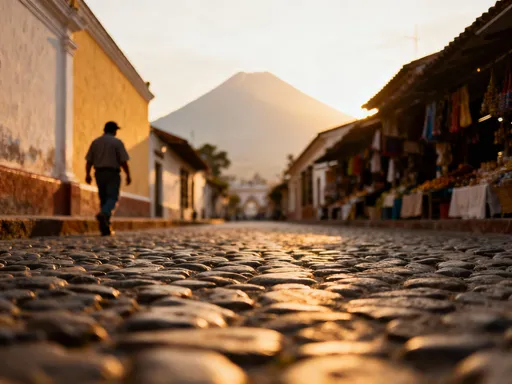
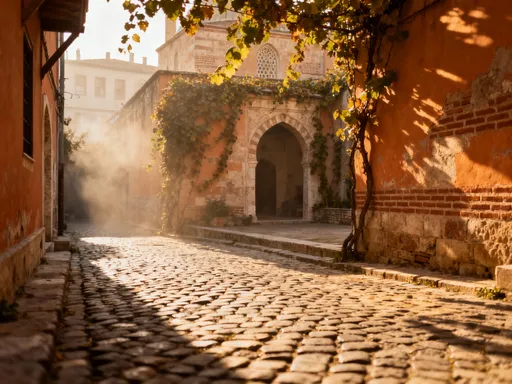
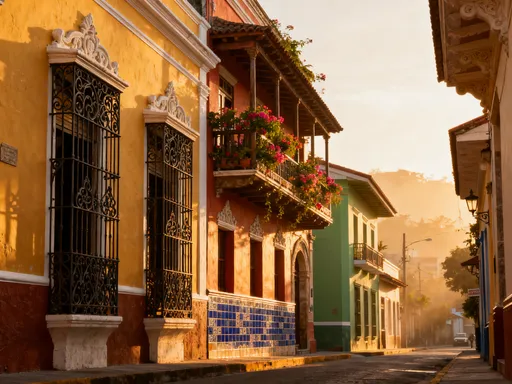
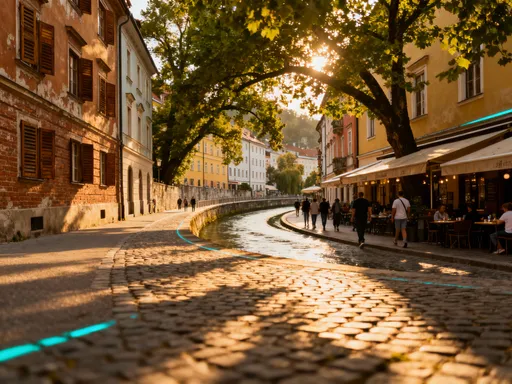
When most travelers think of Antigua Guatemala, they picture a perfectly framed photograph: soft-hued colonial buildings with red-tiled roofs, narrow cobbled streets winding beneath the ever-watchful silhouette of Volcán de Agua, and the golden glow of late afternoon light dancing across ornate church facades. It’s a vision so idealized that it has become synonymous with the city itself—a postcard fantasy printed on souvenirs, travel brochures, and Instagram feeds. And while this image holds a grain of truth, it captures only a sliver of Antigua’s reality, often at the expense of its deeper, more nuanced character.
The central plazas—especially Parque Central and Parque de la Concordia—are undeniably beautiful, lined with cafes, flower stalls, and the imposing Cathedral of San José. Yet by mid-morning, these spaces swell with tour groups, cruise ship day-trippers, and selfie-stick wielders circling like bees drawn to honey. The once-contemplative atmosphere gives way to a bustling marketplace of commercialized charm. Nearby, rows of souvenir shops sell nearly identical wares: handwoven textiles, ceramic volcanoes, and painted masks, many imported from elsewhere in Central America. The illusion of authenticity is strong, but the experience is increasingly curated for tourist consumption rather than cultural connection.
Even guided walking tours, often marketed as “insider” experiences, can fall short. Many follow the same well-worn paths, emphasizing architectural highlights while skipping over the neighborhoods where real life unfolds. Guides recite rehearsed facts about Spanish colonial rule or earthquake damage, but rarely pause to explain how residents today live alongside this history—how a mother walks her child to school past a 17th-century ruin, or how a baker opens his oven at dawn in a centuries-old stone building. The danger isn’t in appreciating the beauty of Antigua’s iconic sights, but in believing that beauty tells the whole story.
What “seeing Antigua” truly means is shifting perspective. It’s recognizing that the city’s soul isn’t confined to its most photographed corners. The real urban fabric reveals itself in the spaces between landmarks—in the way laundry hangs between buildings, how dogs nap in sunlit doorways, and how street vendors arrange their fruit with quiet pride. To move beyond the postcard is not to reject Antigua’s charm, but to deepen it. It’s choosing to look down side alleys instead of just down the lens of a camera, and asking not just what something looks like, but what it means to those who live here.
The Overlooked Corners: Where Antigua’s Soul Lives
If Antigua’s postcard image is painted in pastels and grand arches, its true essence is rendered in the subtler tones of everyday life. Beyond the polished plazas and boutique-lined streets, neighborhoods like Santa Bárbara, Las Rosas, and San Miguel D’Escobar offer a more intimate portrait of the city. These areas lie just beyond the tourist core, often within a 15-minute walk, yet feel worlds apart in atmosphere and authenticity. Here, life unfolds at a different pace—slower, more grounded, and rich with the textures of lived experience.
In Santa Bárbara, for instance, narrow lanes climb gently toward the hills, flanked by modest homes with hand-painted doors and flower-filled planters. Unlike the uniform facades of downtown, these houses reflect individuality—some painted in faded blues and yellows, others left in natural stone. The air carries the scent of wood smoke and fresh corn as families prepare tortillas over open flames. On weekends, local markets buzz with activity, where vendors sell everything from ripe mangoes to handmade brooms. There’s no English signage, no souvenir stalls—just the rhythm of commerce as it has existed for generations.
Equally revealing are the city’s neighborhood fondas—small, family-run eateries tucked into residential corners. These are not the tourist-oriented cafes serving avocado toast and lattes, but humble spaces where Guatemalans gather for breakfast or a midday meal. A typical fonda might have two tables, a steaming pot of beans, and a grandmother flipping tortillas on a comal. The menu is simple: eggs with tomato sauce, tamales wrapped in banana leaves, sweet atol de elote. To eat here is to participate in a daily ritual, one that connects food, family, and place in a way no gourmet tour ever could.
Even the city’s quieter churches, often overlooked by visitors, speak volumes. Take the Iglesia de Santa Bárbara, a small parish church with a weathered stone exterior and a bell that rings at 6 a.m. and 6 p.m. On Sunday mornings, families arrive in their Sunday best, children clutching hymnals, elders leaning on canes. The service is conducted in Spanish and sometimes Kaqchikel, one of Guatemala’s Mayan languages. There’s no entrance fee, no guided tour—just quiet devotion. These moments, unphotographed and unshared online, are where Antigua’s spirit resides: not in spectacle, but in continuity.
To experience these spaces is to understand that a cityscape is more than a collection of buildings. It is shaped by sound—the clang of a blacksmith’s hammer, the call of a bread vendor biking through the alley; by touch—the coolness of volcanic stone under fingertips, the rough grain of a wooden gate; by smell—the mingling of jasmine, frying plantains, and damp earth after a rain. These sensory layers form a narrative far richer than any guidebook summary. They remind us that Antigua is not a museum, but a living city, breathing and evolving with each passing day.
Timing Is Everything: Beating the Crowd to Claim the City
One of the simplest yet most powerful ways to see Antigua differently is to change when you explore it. The city’s character shifts dramatically with the hour, and those who rise early are rewarded with a version of Antigua few ever witness. Between 6:00 and 8:00 a.m., the streets are nearly silent, the plazas free of crowds, and the light soft and golden. This is the hour when the city belongs not to tourists, but to its residents—and to those lucky enough to walk its streets at dawn.
At this time, the Santa Catalina Arch stands in quiet dignity, unobstructed by selfie lines. Mist still clings to the slopes of Volcán de Agua, and the first rays of sun strike the yellow façade of La Merced Church, making its pink trim glow like embers. Street sweepers push brooms along cobbled lanes, their rhythmic scraping echoing between buildings. Bakers open their ovens, releasing clouds of warm, yeasty air. Schoolchildren in crisp uniforms walk in pairs, backpacks bouncing, their laughter breaking the morning stillness. This is Antigua in motion, not performance.
By contrast, midday brings a wave of visitors that transforms the city’s mood. Cruise ships dock in nearby Puerto Quetzal as early as 7:00 a.m., disgorging hundreds of day-trippers by 10:00 a.m. Tour buses line up along Avenida Sur, and groups in matching hats follow guides with raised umbrellas. Calle del Arco, one of the most photographed streets in Central America, becomes a bottleneck of slow-moving pedestrians. Cafes fill quickly, and even the shade under the arch feels crowded. While there’s nothing wrong with enjoying the city at any hour, the experience is undeniably different—more transactional, less contemplative.
Planning your exploration around local rhythms, rather than tourist schedules, makes all the difference. Visit the central market early, when vendors are setting up and produce is freshest. Attend a morning mass at a neighborhood church. Walk the outer streets before 8:00 a.m. to see how the city wakes up. Later in the day, consider retreating to quieter zones—libraries, cultural centers, or residential hillsides—where the pace remains calm. Evenings, while livelier, offer their own rewards: families gathering in plazas, musicians playing folk songs, the scent of grilled meat drifting from backyard kitchens. By aligning your rhythm with the city’s, you stop being a spectator and begin to feel like a guest in someone’s home.
Architectural Storytelling: Reading the Ruins and Facades
Antigua’s architecture is not merely decorative—it is a language, speaking of resilience, adaptation, and survival. Every cracked wall, every rebuilt tower, carries a story shaped by centuries of history and natural forces. To see the city’s buildings as more than backdrops is to engage in a quiet conversation with the past. The Santa Catalina Arch, perhaps the most iconic symbol of Antigua, was originally constructed in the 17th century to allow cloistered nuns to cross the street without being seen. Today, it stands as both a tourist attraction and a testament to the city’s layered identity—a blend of religious tradition, colonial engineering, and modern-day preservation.
Equally significant is the Iglesia y Convento de La Merced, with its striking yellow and white façade and intricate stone carvings. Though rebuilt after multiple earthquakes, including the devastating 1773 quake that led to the capital’s relocation, the church remains a centerpiece of Antigua’s skyline. Its current form reflects not just colonial ambition but the persistent effort to restore beauty after destruction. Inside, the cloister garden offers a peaceful retreat, its fountain surrounded by orange trees—a space designed for reflection, not photography.
But the true narrative of Antigua’s architecture lies in its ruins. Scattered throughout the city are the skeletal remains of churches, convents, and monasteries—structures never fully rebuilt after seismic events. The ruins of La Compañía de Jesús, with its towering columns and vaulted arches, evoke both grandeur and loss. These are not neglected spaces, but preserved as monuments to history. Walking among them, one feels the weight of time, the fragility of human creation, and the enduring will to rebuild.
Travelers can engage with this architectural story through self-guided walks that connect historical dots. Start at the Palacio de los Capitanes Generales, once the seat of colonial power, then move to the Catedral de San José, whose remaining tower offers panoramic views. From there, trace the path to the ruins of the Escuela de Cristo and the Capuchinas Convent, each site revealing a different facet of Antigua’s past. No guidebook can replace the act of observation—of noticing how a modern home is built into an old convent wall, or how a café uses repurposed stone columns. These details tell a story of continuity, not just preservation.
Local Eyes, Not Tourist Lenses: How to See Like a Resident
Seeing Antigua like a local begins with a shift in posture—from observer to participant. It means moving through the city with curiosity and respect, engaging with its people and rhythms rather than simply documenting them. One of the most revealing experiences is riding a *chicken bus*, a brightly painted former U.S. school bus used for public transportation. Though most tourists stick to taxis or shuttles, boarding a local bus on the edge of town offers a raw, unfiltered glimpse into daily life. Passengers carry groceries, toddlers, and live chickens; music blares from a phone speaker; conversations flow in rapid Spanish. It’s not always comfortable, but it’s real.
Equally transformative is the simple act of conversation. A smile and a polite “buenos días” to a shopkeeper can open a door. Many small business owners have lived in Antigua for generations and are happy to share stories—if you take the time to listen. A weaver at a textile cooperative might explain the meaning behind a traditional pattern. A baker might describe how his recipe has been passed down for decades. These moments, brief as they may be, create connections that no tour ever can.
Another key is to follow the rhythm of local life. Visit the Mercado de Artesanías in the morning, when vendors arrange their goods with care. Sit at a neighborhood fonda and watch as families come and go. Notice how schoolchildren line up before class, how street cleaners sweep the same corners every day, how elders gather in shaded benches to chat. These routines are not performances; they are the quiet pulse of the city.
Slowing down also leads to unexpected discoveries. A mural of a Mayan calendar hidden in an alley. A courtyard garden blooming behind a rusted gate. A street musician playing a marimba with eyes closed in concentration. These moments cannot be scheduled or predicted—they emerge from presence, from being open to what the city offers beyond the itinerary. To see like a resident is to accept that not every experience must be captured, shared, or monetized. Some beauty is meant to be felt, not framed.
Photography with Purpose: Capturing the City Without Exploiting It
In an age of social media, photography has become a primary way we experience travel—but it can also distance us from it. In Antigua, where every corner seems designed for a perfect shot, the temptation to treat the city as a stage is strong. Yet ethical photography means more than avoiding offensive images; it means approaching the city with humility and awareness. It means asking permission before photographing people, especially children and elders. It means respecting private spaces—courtyards, homes, places of worship—as off-limits unless invited.
Instead of chasing selfies with the Santa Catalina Arch, consider photographing the textures of the city: the rust on an iron gate, the pattern of cobblestones worn smooth by centuries of footsteps, the way morning light filters through a lace curtain. These details tell a deeper story than any posed portrait. A vendor’s hands arranging avocados, a child’s chalk drawing on the pavement, laundry fluttering between buildings—these are the moments that capture Antigua’s spirit without reducing it to a commodity.
When photographing people, do so with consent and context. A portrait of a weaver at her loom, taken with her permission, becomes a collaboration rather than an intrusion. Framing the shot to include her workspace, her tools, her expression of focus—this honors her labor and dignity. In contrast, snapping a quick photo of someone selling fruit without acknowledgment turns a person into a prop.
Ultimately, photography with purpose means seeking beauty in imperfection—in the chipped paint of a colonial wall, in the uneven steps of a ruined staircase, in the resilience of a city that has rebuilt itself again and again. It means capturing not just what Antigua looks like, but what it feels like to be there, in that moment, as a respectful guest.
Beyond the City Walls: How the Landscape Shapes the Urban View
Antigua does not exist in isolation. Its identity is inseparable from the dramatic landscape that surrounds it—volcanic peaks, fertile highland valleys, and misty cloud forests. The city’s layout, architecture, and even daily rhythms are shaped by its geography. Volcán de Agua looms to the south, a constant presence that influences weather, agriculture, and cultural memory. Its name—“Volcano of Water”—comes from a catastrophic lahar in 1541 that buried the original capital, a reminder of nature’s power.
Viewpoints like Cerro de la Cruz offer panoramic perspectives, drawing crowds for sunrise photos. While the vista is undeniably stunning—Antigua sprawled below, framed by volcanoes—it has become overcrowded and, in recent years, less safe due to petty crime. Travelers are advised to visit in groups, during daylight, and with caution. A quieter, equally rewarding alternative is El Tanque, a former water reservoir turned viewpoint on the city’s northern edge. Less frequented, it offers a serene vantage point with views of the valley and surrounding hills.
Understanding Antigua’s place in the region deepens appreciation for its urban design. The city’s narrow streets and thick stone walls were built to withstand earthquakes, a response to centuries of seismic activity. Its elevation—about 1,500 meters above sea level—gives it a mild climate ideal for agriculture, which in turn supported its historical role as a commercial and religious center. Day trips to nearby villages like Santa María de Jesús or San Juan del Obispo reveal how rural life and urban culture intertwine, with farmers bringing produce to Antigua’s markets and families traveling in for medical care or education.
By venturing beyond the city, travelers gain a fuller picture—not of Antigua as a standalone gem, but as a living node in a vibrant, interconnected landscape. This perspective fosters not just admiration, but understanding.
Conclusion: Seeing Antigua—Really Seeing It
To see Antigua Guatemala is not to collect sights, but to cultivate awareness. It is to move beyond the postcard and embrace the city in its full complexity—the quiet alleys, the morning rituals, the textures of stone and sound, the resilience etched into its walls. Avoiding tourist traps is not an act of cynicism, but of respect. It is a choice to engage with a place on its own terms, to listen before speaking, to observe before photographing, to walk before posting.
The true magic of Antigua lies not in its perfection, but in its imperfection—in the way life persists and flourishes despite earthquakes, despite time, despite the pressures of tourism. It is in the grandmother rolling tortillas at dawn, the schoolboy balancing a stack of books, the artist restoring a mural inch by inch. These are the moments that define a city’s soul.
So when you walk Antigua’s cobbled streets, let your eyes stay wide open—not just to beauty, but to meaning. Let your heart stay open to connection. And remember: the most authentic travel is not about where you go, but how you see. See Antigua not as a destination, but as a conversation—one that rewards patience, humility, and the courage to look beyond the surface.