Wandering Through Time: Istanbul’s Cultural Soul Uncovered
Istanbul doesn’t just sit between continents—it pulses with layers of history, faith, and art that pull you in with every step. As I wandered its ancient streets, I wasn’t just visiting museums and mosques—I was feeling the city’s rhythm. From Byzantine echoes to Ottoman grandeur, each cultural site tells a story richer than any guidebook could capture. The scent of incense lingers in centuries-old stone halls, the call to prayer drifts over bustling bazaars, and sunlight filters through stained glass like whispered secrets from the past. This is travel that changes how you see the world—not through spectacle alone, but through connection, stillness, and the quiet realization that you are walking where empires once dreamed.
The Spirit of the City: Why Culture Defines Istanbul
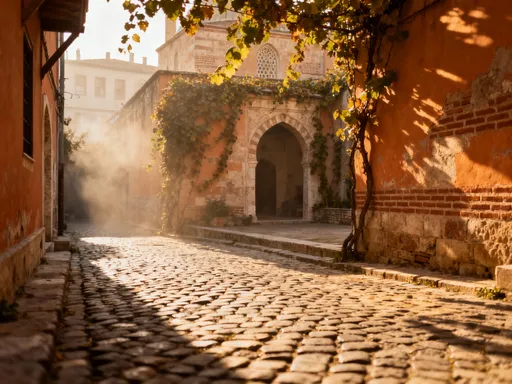
Istanbul is not a city defined by monuments alone, but by the living breath of its people and the deep resonance of its layered past. For over two thousand years, this metropolis has stood as a bridge—not only between Europe and Asia, but between faiths, empires, and ways of life. Once known as Byzantium and later Constantinople, it became Istanbul after the Ottoman conquest in 1453, each name marking a transformation in identity, governance, and culture. Yet what makes Istanbul truly unique is not its historical transitions, but how those histories coexist today in daily life. In neighborhoods like Sultanahmet, where ancient mosaics lie beneath modern footpaths, and in Kadıköy, where artists sip coffee beside fish markets that have operated for generations, the past is not preserved behind glass—it is lived.
The emotional power of Istanbul lies in its authenticity. Unlike cities that have been sanitized for tourism, Istanbul remains deeply rooted in tradition while embracing change. Women in headscarves walk past street murals of Sufi poets; calligraphers write verses in Arabic script while teenagers listen to pop music from nearby shops. This coexistence is not forced—it is natural, evolved, and deeply respectful. Travelers who come seeking only the iconic domes and minarets may miss the true heartbeat of the city: the rhythm of prayer, the shared tea between strangers, the quiet dignity in everyday rituals. Cultural immersion here means more than checking landmarks off a list—it means allowing oneself to be present, to listen, to observe, and to feel the weight of centuries in a single moment.
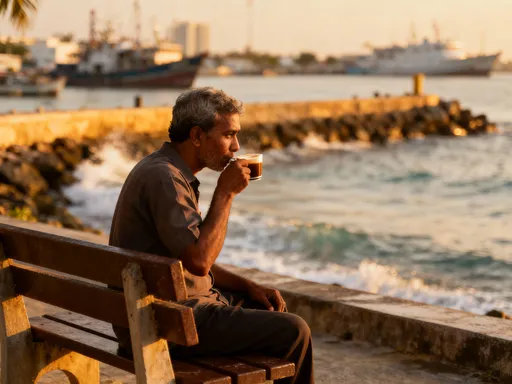
To understand Istanbul, one must shift from sightseeing to sensing. This means visiting not just to photograph, but to experience. It means pausing in a quiet courtyard to hear the wind through cypress trees, or accepting an offer of apple tea from a shopkeeper who wants to share a piece of his world. It means recognizing that the city’s soul is not in its perfection, but in its complexity—the worn marble steps of a mosque smoothed by millions of footsteps, the calligraphy on a 16th-century fountain still legible after centuries of rain. Istanbul does not perform for visitors; it simply is. And in that being, it invites you to slow down, to look deeper, and to discover not just a place, but a way of life shaped by resilience, beauty, and continuity.
Hagia Sophia: Where History Stands Still and Moves
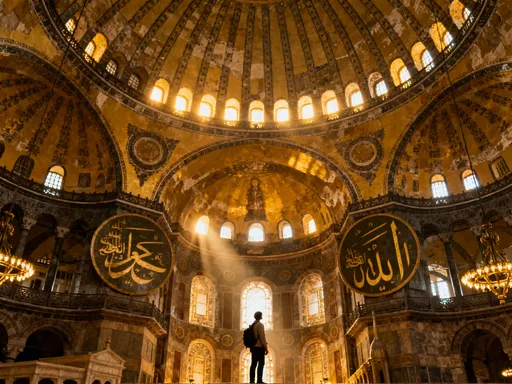
Entering Hagia Sophia is like stepping into a sacred pause between time and eternity. The sheer scale of the dome—rising over 55 meters above the ground—creates an immediate sense of awe, but it is the silence within that truly captures the soul. Light filters through dozens of windows along the base of the dome, casting a soft, golden glow that seems to hover above the marble floors. Mosaic fragments of Byzantine emperors and Christian saints peer down from the upper galleries, their eyes half-hidden beneath layers of plaster, remnants of a past when this was the greatest cathedral in Christendom. Today, as a mosque once again, the space carries both reverence and memory, a place where prayer rugs are laid out in careful rows, yet the echoes of history remain audible in the stillness.
Originally built in 537 under the Byzantine Emperor Justinian I, Hagia Sophia stood as the heart of Eastern Orthodox Christianity for nearly a thousand years. Its engineering was revolutionary—architects Anthemius of Tralles and Isidore of Miletus designed a massive dome that appeared to float on light, a feat that inspired awe across the medieval world. When the Ottomans conquered Constantinople in 1453, they transformed the cathedral into a mosque, adding minarets, calligraphy panels, and a mihrab to orient prayer toward Mecca. Over the centuries, layers of Islamic art were added, coexisting with the Christian mosaics that were eventually covered and later uncovered. In 1935, under Turkey’s secular republic, it became a museum—a symbol of cultural synthesis. In 2020, it was reclassified as a mosque, reflecting ongoing conversations about identity, heritage, and faith.
Yet regardless of its official designation, Hagia Sophia remains a monument to human aspiration. It is not merely an architectural marvel, though its engineering brilliance is undeniable. It is a living record of cultural fusion—where Christian iconography shares space with Islamic calligraphy, where the call to prayer now resonates beneath the same dome that once echoed with Gregorian chants. Visitors are asked to dress modestly and remove their shoes before entering the prayer areas, a small act of respect that deepens the experience. To stand beneath that dome is to feel the weight of empires, the passage of faiths, and the quiet endurance of a building that has witnessed the rise and fall of worlds. It does not speak in words, but in atmosphere—inviting reflection, humility, and a rare sense of connection across centuries.
The Grand Bazaar: More Than Just Shopping
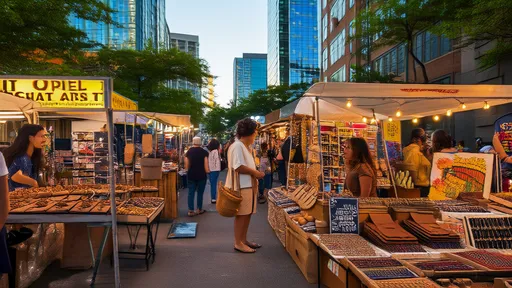
The Grand Bazaar is not a marketplace—it is a city within a city, a labyrinth of over 4,000 shops spread across 60 streets and covered by 61 domes. From the moment you pass through the Nuruosmaniye Gate, the air changes: warm, spiced, alive with the murmur of bargaining, the clink of copper, and the rustle of silk. The scent of saffron, dried figs, and rosewater mingles with the earthy aroma of leather and the sharp tang of metal polish. Stalls overflow with hand-painted ceramics, intricately woven kilims, and lanterns of colored glass that cast rainbow patterns on the stone floor. But beyond the dazzle of goods, the true richness of the Grand Bazaar lies in its rhythm, its traditions, and the small human moments that unfold in its shadowed corners.
Established in 1455, just two years after the Ottoman conquest, the bazaar began as a covered market for textiles and quickly grew into one of the world’s oldest and largest continuously operating markets. It was not merely a place of commerce, but a social and cultural hub—a space where news was exchanged, alliances formed, and artisans passed down skills through generations. Today, while tourism has brought new energy, many vendors still operate family-run shops that have existed for over a century. A coppersmith in the Sipahiler Caddesi hammers a tray with the same technique used in the 16th century. A carpet seller unrolls a hand-knotted kilim and explains the symbolism of its patterns—the tree of life, the eye of protection, the waters of abundance. These are not sales pitches; they are stories, offered with pride and patience.
For the thoughtful traveler, visiting the Grand Bazaar is an opportunity to engage, not just acquire. The art of bargaining—known locally as pazarlık—is not aggressive, but conversational. It is expected, even welcomed, but should be done with respect. A smile, a polite refusal, and a willingness to walk away often lead to better outcomes than insistence. The best times to visit are weekday mornings, when the crowds are thinner and artisans are more available for conversation. Dress comfortably, carry a small bag, and don’t rush—some of the most memorable moments happen when you pause to accept a glass of Turkish tea from a vendor who simply wants to share a moment of hospitality. And while souvenirs are tempting, consider supporting local craftspeople by purchasing directly from workshops in the back alleys, where handmade goods reflect generations of skill rather than mass production.
Topkapi Palace: Walking in Sultans’ Footsteps
Perched on Seraglio Point, overlooking the confluence of the Bosphorus, the Sea of Marmara, and the Golden Horn, Topkapi Palace was the administrative and residential heart of the Ottoman Empire for nearly 400 years. More than a royal residence, it was a self-contained world governed by strict protocol, hierarchy, and ritual. Today, as a museum, it offers an intimate glimpse into the lives of sultans, courtiers, and servants whose daily routines shaped the fate of an empire. The palace is not a single building, but a series of courtyards, pavilions, and gardens enclosed by high walls, each level revealing deeper layers of privacy and power. As visitors pass through the Imperial Gate, they begin a journey not just through space, but through time—from public ceremony to private devotion, from political intrigue to spiritual reflection.
The First Courtyard, open to the public, housed military barracks and administrative offices. The Second Courtyard, accessible only to officials and honored guests, was the center of state affairs, where foreign ambassadors were received and imperial decrees issued. Here, the Divan Chamber stands as a modest wooden building where council meetings shaped Ottoman policy. Beyond lies the Third Courtyard—the Inner Palace—reserved for the sultan, his family, and the highest-ranking officials. This is where the atmosphere shifts: the noise fades, the architecture becomes more refined, and the sense of intimacy grows. The Privy Chamber holds some of the palace’s most treasured artifacts: a jeweled dagger gifted to a French ambassador (later central to a famous heist), a jade wine cup once owned by Sultan Suleiman the Magnificent, and a collection of exquisite calligraphy scrolls inscribed with verses from the Qur’an.
Perhaps most evocative is the Harem, a complex of over 300 rooms that housed the sultan’s family, concubines, and servants. Long misunderstood in Western imagination, the Harem was not a place of indulgence, but a highly structured household governed by its own rules and hierarchies. The mother of the sultan, known as the Valide Sultan, often wielded significant influence over politics and palace affairs. Rooms such as the Sultan’s Bath, the Courtyard of the Black Eunuchs, and the apartments of the favorite consorts reveal a world of quiet luxury—marble fountains, stained glass windows, and silk-covered divans. The artifacts on display—ceremonial robes, personal letters, children’s toys—bring this world to life, reminding visitors that behind the imperial title were real people with emotions, ambitions, and daily routines. Walking through Topkapi is not about marveling at opulence alone, but about understanding a civilization through its values: discipline, piety, artistry, and the delicate balance between public duty and private life.
Mosques Beyond the Minarets: Süleymaniye and Blue Mosque
While Istanbul’s skyline is defined by its minarets, the true essence of its mosques lies not in their silhouettes, but in their stillness. The Süleymaniye Mosque and the Blue Mosque—though often visited for their beauty—serve first and foremost as places of worship, their interiors designed to inspire humility, reflection, and connection with the divine. Both were built during the golden age of Ottoman architecture, yet each carries a distinct character shaped by its history, location, and spiritual purpose. To visit them is not to admire from a distance, but to step into spaces where faith is lived, not displayed.
The Süleymaniye Mosque, completed in 1557 by the great architect Mimar Sinan for Sultan Suleiman the Magnificent, stands atop one of Istanbul’s highest hills, offering panoramic views of the city and the Golden Horn. Sinan considered this his masterpiece, a harmonious blend of structural precision and spiritual grandeur. The mosque’s dome, slightly smaller than Hagia Sophia’s, creates a sense of balance rather than dominance. Inside, the space is luminous and serene, with soft light filtering through 138 windows and the sound of prayer echoing with perfect acoustics. The tilework is restrained compared to other mosques, emphasizing simplicity and elegance. Four minarets mark the corners, symbolizing Suleiman’s status as the fourth Ottoman sultan after the conquest of Constantinople. Surrounding the mosque is a complex that once included a hospital, school, soup kitchen, and baths—testaments to the Ottoman commitment to social welfare.
In contrast, the Sultan Ahmed Mosque, commonly known as the Blue Mosque, completed in 1616, is a spectacle of color and detail. Its interior is lined with over 20,000 handmade ceramic tiles in more than fifty shades of blue, giving the mosque its popular name. The six minarets—unusual for the time—reflect the ambition of Sultan Ahmed I, who sought to rival the grandeur of Mecca’s holy sites. Yet despite its ornate beauty, the atmosphere inside remains deeply reverent. The central dome, supported by four massive columns, creates a sense of openness, while the stained glass windows cast a soft, ethereal light. Visitors are welcome outside of prayer times, but must dress modestly—women are provided with scarves at the entrance—and maintain quiet respect. Unlike museums, these mosques are not frozen in time; they are alive with prayer, community, and daily ritual. Hearing the call to prayer echo through the courtyard, feeling the cool marble beneath bare feet, and witnessing the devotion of worshippers offer a rare glimpse into the spiritual heart of Istanbul.
Hidden Cultural Gems: Local Theaters, Hamams, and Libraries
Beyond the well-trodden paths of Sultanahmet and the tourist-filled alleys of the Grand Bazaar, Istanbul reveals its most authentic self in quieter corners. These are the places where tradition is not performed, but practiced—where culture is lived in daily rituals, artistic expression, and communal spaces. A performance of traditional Turkish music in a restored 19th-century konak, a visit to a historic hamam that has served locals for centuries, or an afternoon spent browsing the ancient shelves of the Beyazıt State Library—these experiences offer intimacy and depth often missed on standard tours. They require a bit more effort to find, but they reward with connection, understanding, and a sense of discovery that lingers long after the trip ends.
In the Karaköy and Kadıköy districts, small cultural centers host performances of Ottoman classical music, Sufi whirling ceremonies, and traditional shadow puppet theater featuring the beloved characters Karagöz and Hacivat. These shows are not staged for tourists; they are part of a living artistic tradition. Attending one offers more than entertainment—it offers insight into humor, social commentary, and spiritual philosophy embedded in centuries-old forms. Similarly, visiting a historic hamam such as the Çemberlitaş Hamamı, designed by Mimar Sinan in 1584, is not just a spa experience, but a ritual of cleansing and relaxation rooted in Ottoman daily life. The process—starting in the warm room, moving to the hot chamber, and ending with a scrub and foam massage—is slow, deliberate, and deeply calming. It is also a social space, where generations of Istanbul residents have gathered to talk, reflect, and renew.
For those drawn to the written word, the Beyazıt State Library, founded in 1884 within a former medrese (Islamic school), houses over 120,000 volumes, including rare manuscripts, Ottoman calligraphy, and early printed books. Though not as famous as European libraries, it is a sanctuary of quiet scholarship, where researchers and readers sit beneath vaulted ceilings, surrounded by the scent of old paper and ink. Travelers are welcome to visit the reading rooms and admire the architecture, a reminder that knowledge and faith were once inseparable in Ottoman society. Supporting local cultural initiatives—by attending a neighborhood theater performance, visiting a community-run museum, or purchasing crafts from artisan cooperatives—ensures that these traditions continue. These hidden gems do not shout for attention; they whisper. But for those who listen, they offer a deeper, more personal understanding of Istanbul’s soul.
How to Travel Deeper: A Mindset, Not a Checklist
True cultural appreciation in Istanbul does not come from visiting the most famous sites, but from the way you move through them. It is not about how many mosques you enter or how many photos you take, but about the presence you bring to each moment. The city reveals itself to those who slow down, who observe, who listen. A traveler who rushes from Hagia Sophia to the Blue Mosque to the Grand Bazaar may see much, but feel little. In contrast, the one who sits on a bench in Gülhane Park and watches the sunlight shift across Topkapi’s walls, or who spends an hour talking with a bookseller near Beyazıt Square, carries away something lasting—a memory not of places, but of connection.
Adopting a deeper travel mindset begins with small choices. Learning a few Turkish phrases—merhaba (hello), teşekkür ederim (thank you), güzel (beautiful)—opens doors in ways guidebooks cannot. Visiting major sites early in the morning or late in the afternoon avoids crowds and allows for quiet contemplation. Choosing a local-led walking tour, rather than a generic group excursion, offers insights into history, daily life, and hidden stories that only residents know. Dining in family-run meyhanes (taverns) or neighborhood eating houses introduces not just flavors, but hospitality—the way a grandmother might serve you lentil soup with a warm smile and a叮嘱 to eat well.
Most importantly, traveling deeper means approaching Istanbul with humility and curiosity. It means recognizing that culture is not a performance, but a way of being. It means respecting prayer times, dressing appropriately at religious sites, and understanding that some moments—like a Sufi ceremony or a family gathering in a courtyard—are not for intrusion, but for quiet observation. When you give the city your attention, it gives you something in return: a shift in perspective, a softening of assumptions, a recognition that history is not behind us, but around us, in the footsteps we follow, the tea we share, and the stories we are invited to witness. Istanbul does not offer answers—it offers reflections. And the more you give, the more it reveals.