Walking Through Fire: Hanoi’s Festivals Like You’ve Never Seen
You know that feeling when the air hums with drums, incense curls around your ankles, and strangers pull you into a dance you don’t know? That’s Hanoi during festival season—alive, chaotic, and utterly real. I hit the streets on foot and found something most tourists miss: the pulse of centuries-old traditions beating right beneath the scooter chaos. This isn’t just sightseeing—it’s stepping into a living story. As neighborhoods transform into open-air theaters of ritual and rhythm, walking becomes more than movement; it’s a form of listening. Each step reveals fragments of devotion, joy, and memory passed from one generation to the next. In this city, where history breathes through alleyways and temple gates, the slow traveler discovers not just culture—but connection.
Why Walk? The Ground-Level Magic of Hanoi’s Festivals
Walking through Hanoi during festival time is like pressing your palm against the heartbeat of the city. Unlike guided bus tours or hurried photo stops, moving on foot allows you to feel the texture of celebration—literally and emotionally. You notice how the scent of grilled pork buns drifts from a cart just as a drumbeat echoes down an alley. You see how an elderly woman adjusts a child’s paper crown before joining a procession. These moments aren’t staged; they unfold naturally when you move at human speed. Festivals in Hanoi are not performances for outsiders—they are lived experiences, and walking is the most respectful way to witness them.
When you walk, your senses sharpen. The rhythm of footsteps syncs with the cadence of chants. You begin to recognize patterns: the way incense smoke spirals upward at temple gates, the sudden hush before a gong strikes, the laughter that follows. This kind of awareness can’t be rushed. It grows from presence. During Tết, the Lunar New Year, entire streets shimmer with red banners and kumquat trees. Families clean ancestral altars while children clutch lucky envelopes. If you’re walking, you might pause at a doorway where an offering is being arranged—five fruits, a bowl of rice, a photograph framed in gold. No one speaks, but the moment communicates volumes.
Slow travel fosters empathy. It allows space to understand why certain colors dominate, why some sounds repeat, why silence holds meaning. In Hanoi, festivals are deeply rooted in spiritual belief and family duty. Walking gives you time to absorb these values without intrusion. You’re not a spectator behind glass; you’re a guest in a shared moment. The city doesn’t stop for tourists—it continues its rituals, and by walking, you align yourself with their flow rather than disrupting it. This alignment is what transforms a visit into a meaningful encounter.
Moreover, walking opens unexpected pathways. A narrow lane may lead to a hidden courtyard where a folk opera troupe rehearses. A side street might reveal a family hanging lanterns in preparation for the Mid-Autumn Festival. These discoveries aren’t found on maps. They emerge from curiosity and pace. By choosing to walk, you embrace serendipity. You trade efficiency for depth. And in a city where tradition thrives in the details—the fold of a ceremonial robe, the pattern on a rice cake—you realize that the smallest moments often carry the greatest weight.
Timing Your Trek: When Hanoi Comes Alive
To walk through Hanoi’s festivals is to step into a calendar shaped by the moon, not the clock. Timing your visit around key celebrations ensures you witness the city at its most vibrant and spiritually alive. The lunar cycle governs major events, each carrying distinct customs, colors, and community energy. Planning ahead allows you to experience Hanoi not as a static postcard, but as a dynamic participant in age-old rhythms.
The most significant is Tết, the Lunar New Year, typically falling between late January and mid-February. This is when Hanoi transforms. Streets glow with red and gold decorations symbolizing luck and prosperity. Businesses close. Families reunite. Homes are cleaned and adorned with peach blossoms or apricot flowers, depending on the region. If you’re walking during this time, you’ll see children in new áo dài outfits, hear firecrackers (now often replaced by recorded sounds due to safety regulations), and smell the rich aroma of bánh chưng—square sticky rice cakes wrapped in banana leaves and steamed for hours. It’s a time of renewal, gratitude, and ancestral remembrance. While crowds are dense, the atmosphere is warm, even joyful, as locals welcome the new year with open hearts.
Another profound moment is Vu Lan, often called the Hungry Ghost Festival, which occurs in the seventh lunar month, usually August. Unlike Western interpretations of ghost stories, Vu Lan is a Buddhist-inspired occasion focused on filial piety and compassion. Temples fill with offerings for ancestors, and many people release floating lanterns on lakes or rivers as symbols of remembrance and release. Walking near West Lake or the Temple of Literature during this time reveals quiet acts of devotion—candles lit, hands clasped in prayer, faces softened by reflection. The mood is contemplative, not fearful. It’s a powerful reminder of how deeply family ties endure beyond life.
The Mid-Autumn Festival, celebrated in September or early October, brings a different energy—lively, colorful, and centered on children. Also known as the Children’s Festival, it features lion dances, drum troupes, and parades of glowing lanterns. Hàng Mã Street becomes a wonderland of handmade paper stars, fish, and moons. Families gather in public squares, and neighborhoods host performances that blend music, dance, and storytelling. If you walk through the Old Quarter on this night, you’ll be swept into a dreamlike procession of light and sound. Children spin lanterns, their faces lit with wonder. Adults smile, remembering their own childhoods. It’s one of the most visually stunning and emotionally resonant times to be in Hanoi.
Other notable dates include the Phật Đản Festival (Buddha’s Birthday) in April or May, when temples are decorated with lotus flowers and processions wind through city streets, and the Đền Hùng Festival in April, honoring national ancestors. While less tourist-heavy, these events offer authentic glimpses into spiritual life. Regardless of which festival you choose, book accommodations early. Hotels fill quickly, and prices rise. More importantly, prepare for crowds—not just in numbers, but in emotion. These are deeply personal occasions for Vietnamese families. As a visitor, your presence should be respectful, your movements considerate. Arriving at the right time means more than catching a spectacle; it means honoring the meaning behind it.
Old Quarter Pulse: Where Tradition Meets Traffic
The Old Quarter is the historic heart of Hanoi, a maze of 36 ancient streets each once dedicated to a specific craft or trade. Today, it remains the epicenter of festival life, where tradition pulses alongside motorbike traffic and sidewalk cafés. Walking here during a celebration feels like moving through layers of time—centuries-old customs unfolding in the shadow of modern commerce. The contrast is not jarring; it’s harmonious, a testament to how culture adapts without losing its soul.
One of the most vivid streets during festival season is Hàng Mã, traditionally associated with paper goods and now famous for its dazzling displays of lanterns, masks, and ornaments. During the Mid-Autumn Festival, the entire street becomes a marketplace of light. Strings of red and yellow paper fish sway above your head. Children point excitedly at dragon-shaped lanterns. Vendors call out prices, their stalls overflowing with handmade treasures. If you walk slowly, you’ll notice how locals interact differently here—they haggle with familiarity, touch items with reverence, and often buy not for decoration, but for ritual use. A paper horse might be destined for an ancestral offering; a red envelope, for a Tết gift.
Đinh Tiên Hoàng Street, running alongside Hoàn Kiếm Lake, transforms into an open stage during major festivals. On Tết evenings, impromptu performances appear—drum circles, traditional dances, even calligraphy masters writing lucky phrases on scrolls. Locals gather on sidewalks, clapping, recording, or simply watching. If you’re walking this route, you might find yourself standing beside a grandmother explaining the meaning of each character to her granddaughter. These unscripted moments are the essence of cultural transmission. No tour guide could replicate them.
Navigating the Old Quarter during peak festival times requires strategy. While immersion is the goal, comfort matters too. Start your walk early in the morning, when streets are quieter and vendors are setting up. This is when you’ll see the behind-the-scenes rituals—the sweeping of temple steps, the arranging of flower garlands, the steaming of fresh bánh cuốn at breakfast stalls. By midday, crowds thicken. Stick to side alleys like Lương Văn Can or Cầu Gỗ, which offer respite while still delivering sensory richness. These smaller streets often host intimate ceremonies—a family offering incense at a neighborhood shrine, a monk distributing blessings.
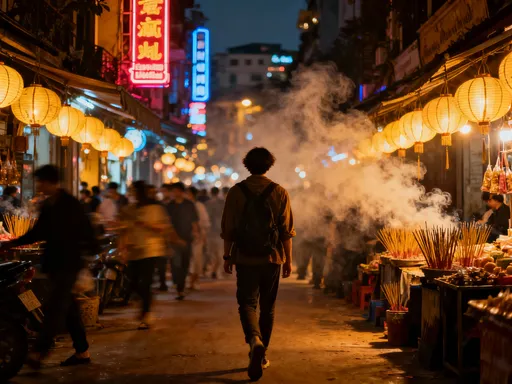
One of the most powerful experiences is catching a drum troupe between noodle shops. Suddenly, the beat starts—deep, resonant, insistent. People pause. Children turn. A group of performers in red and gold uniforms begins a synchronized rhythm, their movements precise, their energy electric. Within minutes, a circle forms. No announcements, no tickets—just spontaneous celebration. This is Hanoi’s magic: the way ritual emerges from daily life, not apart from it. By walking, you don’t just see this—you become part of its audience, its witness, its memory.
The Hidden Rhythms: Offbeat Neighborhoods & Local Rituals
Beyond the postcard-perfect alleys of the Old Quarter lie neighborhoods where festivals unfold with quieter intensity. These are not curated for tourists but lived by families, monks, and village elders. Walking through these areas requires humility and patience, but the rewards are profound. Here, tradition is not performed—it is practiced.
West Lake, one of Hanoi’s largest bodies of water, is surrounded by pagodas and residential zones where local communities observe festivals with deep devotion. During Vu Lan, residents gather at temples like Trấn Quốc, Vietnam’s oldest Buddhist pagoda, to make offerings and release lanterns. If you walk the perimeter path at dusk, you’ll see couples, families, and solitary figures placing small floating lights onto the water. The silence is broken only by the soft splash of each release. There’s no fanfare, no music—just a collective act of remembrance. These moments are not meant for photographs, but for presence.
Further out, in districts like Tây Hồ or Long Biên, village pagodas host seasonal festivals that blend ancestor worship with agricultural gratitude. The rituals vary—some involve processions with palanquins carrying sacred statues, others include communal meals prepared in outdoor kitchens. In Thăng Long, the ancient imperial city, certain courtyards still hold ceremonies honoring historical figures and royal lineage. These events are modest in scale but rich in symbolism. You might see elders in traditional dress bowing three times before an altar, or children learning ancient chants from their grandparents.
What unites these spaces is their emphasis on continuity. Festivals here are not spectacles but acts of preservation. They teach younger generations about identity, duty, and belonging. As a visitor, your role is not to participate fully, but to observe respectfully. This means moving quietly, avoiding loud conversations, and never touching sacred objects. If invited to join—perhaps offered a flower to place on an altar—accept with both hands and a slight bow. These gestures speak louder than words.
Walking through these neighborhoods also reveals how geography shapes tradition. Riverside shrines incorporate water symbolism into their rituals. Mountain-adjacent pagodas emphasize elevation and ascent as spiritual metaphors. Even within Hanoi, customs shift subtly from district to district. This diversity reflects Vietnam’s regional richness. By venturing beyond the center, you gain a more nuanced understanding of how culture thrives in both unity and variation.
Walking Smart: What to Wear, Carry, and Watch For
Comfort and respect go hand in hand when walking through Hanoi’s festivals. What you wear, carry, and do can greatly affect your experience—and your impact on the communities you visit. Practical preparation ensures you stay safe, comfortable, and culturally considerate.
Dress in breathable, modest clothing. Lightweight fabrics like cotton or linen help manage humidity, especially during spring and summer festivals. Avoid revealing outfits—sleeves that cover shoulders and skirts or pants that reach below the knee are appropriate, particularly when entering temples or attending ceremonies. Closed-toe shoes are essential. Streets may be uneven, crowded, or wet from offerings. Comfortable walking shoes prevent fatigue and protect your feet during long hours of exploration.
Carry a small backpack with essentials: a reusable water bottle, hand sanitizer, tissues, and a light rain jacket. Sudden showers are common, especially during the monsoon season. If you plan to visit temples, consider bringing a small offering—incense sticks, lotus flowers, or fruit. These are often available for purchase near temple entrances, but having one ready shows intentionality. Never offer alcohol or meat at Buddhist shrines; stick to vegetarian items or symbolic gifts.
Cultural etiquette is crucial. Always remove your shoes before entering homes or certain temple areas. When receiving something—a gift, a blessing, a cup of tea—use both hands as a sign of respect. Bow slightly when greeting elders or monks. Avoid pointing with your feet or touching someone’s head, as both are considered impolite. If you’re invited to join a ritual, follow the lead of locals. Do not mimic actions you don’t understand. Quiet participation is more valued than enthusiastic imitation.
Photography requires special care. While capturing memories is natural, avoid intrusive shots—especially of people in prayer, mourning, or private moments. Ask permission before photographing individuals, particularly children. In many communities, photographing sacred objects or altars is discouraged. Instead, focus on details: the texture of a lantern, the pattern on a cake, the reflection of light on water. These images often convey more meaning than posed portraits. Above all, remember that you are a guest. Your presence should enhance, not disrupt, the sacredness of the occasion.
Feast & Flow: How Food Moves With the Festival
In Hanoi, festivals are tasted as much as they are seen. Food is not a side note—it’s a central thread in every celebration. Each dish carries symbolism, history, and intention. Walking through the city during a festival means following your nose as much as your map, discovering how culinary traditions mark the passage of time and honor the bonds of family.
During Tết, no table is complete without bánh chưng and bánh tét—square and cylindrical sticky rice cakes filled with mung bean and pork, wrapped in banana leaves. Their preparation is a ritual in itself, often done in large groups where families gather to wrap and steam them overnight. The cakes symbolize the earth and sky, and their green wrappers evoke nature’s renewal. If you’re walking through residential areas during this time, you might catch the earthy scent of banana leaves and wood smoke drifting from open kitchens. Some families even invite neighbors to share in the cooking—a gesture of community and goodwill.
The Mid-Autumn Festival brings a sweeter palette. Children receive mooncakes—small, dense pastries filled with lotus seed, salted egg yolk, or mung bean. The round shape represents completeness and reunion. Street vendors sell them in decorative boxes, but homemade versions carry deeper meaning. As you walk through parks or public squares, you’ll see families sharing mooncakes under the full moon, telling stories of the Jade Rabbit or the Moon Lady. It’s a moment of intergenerational connection, where myth and memory blend.
Throughout the year, seasonal ingredients shape what’s served. In autumn, lotus tea appears—delicate, fragrant, and often hand-picked from West Lake. Vendors near temples may offer free cups during festivals as an act of merit. In spring, fresh herbs and young greens dominate, symbolizing growth and vitality. Even street food evolves: phở might be served with special garnishes, or xôi (sticky rice) topped with dried coconut and sesame for luck.
Walking allows you to follow the flow of food—from market to altar to table. Visit a morning market like Đồng Xuân and watch vendors arrange fruits for offerings: oranges for gold, kumquats for prosperity, coconuts for completeness. Later, see those same items on home altars. By midday, they may appear on lunch tables, having been “blessed” through ritual. This cycle—from offering to nourishment—reflects a worldview where the sacred and the everyday are inseparable. Every bite becomes an act of gratitude.
Beyond the Moment: Carrying Hanoi’s Spirit Forward
Walking through Hanoi’s festivals changes you. It’s not just about the photos you take or the souvenirs you bring home. It’s about the way a child’s laughter during a lantern parade stays with you for years. The way the smell of incense can suddenly transport you back to a quiet temple courtyard. The way you begin to notice rituals in your own life—small acts of care, moments of pause, gestures of connection.
Most tourism is fleeting. We arrive, observe, and leave. But walking through these celebrations invites a different kind of travel—one that lingers. You don’t just see tradition; you feel its rhythm in your steps, hear its echo in your breath, carry its warmth in your memory. You learn that culture is not a display behind glass, but a living current, shaped by those who honor it daily.
This kind of journey calls for mindfulness. It asks us to move slowly, listen deeply, and receive with gratitude. It reminds us that the most meaningful experiences are not consumed—they are shared. In Hanoi, festivals are not for show. They are acts of love, remembrance, and hope. By walking through them with respect, we don’t take something from the culture—we become part of its story.
And perhaps that is the greatest gift. Not a souvenir, but a shift in perspective. The understanding that joy can be simple, that tradition can be vibrant, that connection can be wordless. As you return home, you carry more than memories. You carry a quieter heart, a deeper curiosity, a renewed sense of belonging to something larger. So walk gently. Stay present. And when the time comes, return—not just to Hanoi, but to the practice of seeing the world with wonder.