Where Art Lives in the Streets: Sarajevo’s Soul on Canvas
You know what? I didn’t expect Sarajevo to hit me this hard. Between the cobblestone alleys and Austro-Hungarian facades, the city breathes art—not in galleries, but on walls, bridges, and tram stops. From street murals to handmade trinkets in hidden courtyards, every corner tells a story. This is urban artistry at its most raw and real. Let me take you where architecture dances with creativity, where history is not preserved behind glass but painted across shuttered buildings and whispered through alleyways. In Sarajevo, art isn’t confined; it’s free, fearless, and deeply human.
First Impressions: A City That Paints Its Past
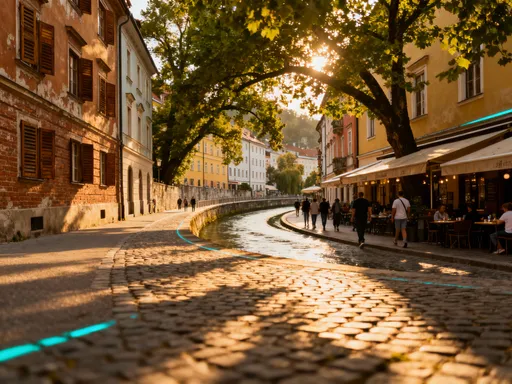
Sarajevo greets visitors with a symphony of architectural styles—Ottoman domes, Austro-Hungarian grandeur, and the utilitarian lines of Yugoslav modernism—each layer a testament to centuries of cultural convergence. This isn’t a city curated for postcards; it’s one shaped by life, conflict, and renewal. Its beauty lies not in perfection, but in presence—the way sunlight catches a cracked wall still bearing bullet marks from the 1990s siege, now transformed into a mosaic of color and meaning. These scars are not hidden; they are honored, often framed by bold street art that turns pain into poetry.
Walking through central neighborhoods like Marijin Dvor or Alifakovac, you’ll notice how graffiti and murals coexist with restored facades and everyday commerce. A freshly painted mural of a child holding a dove might stretch across the side of a war-damaged building, its message both tender and defiant. This blending of decay and creativity gives Sarajevo a unique visual rhythm—one where urban renewal doesn’t erase history but reinterprets it. The city skyline, dotted with minarets and church spires, feels like an open-air museum, where every building tells a chapter of a complex, layered story.
What sets Sarajevo apart from other European capitals is its authenticity. There’s no attempt to sanitize the past. Instead, the city invites you to engage with it. Local artists, many of whom lived through the war, use public spaces to reflect on identity, loss, and hope. A mural near the Eternal Flame monument depicts overlapping faces of different ethnicities, a quiet but powerful statement on unity. These works aren’t just decorative; they’re part of an ongoing civic dialogue, a way for the city to process its past while imagining a more inclusive future.
The Baščaršija Quarter: Where Tradition Meets Street Art
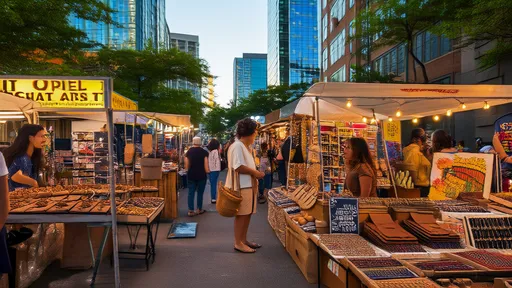
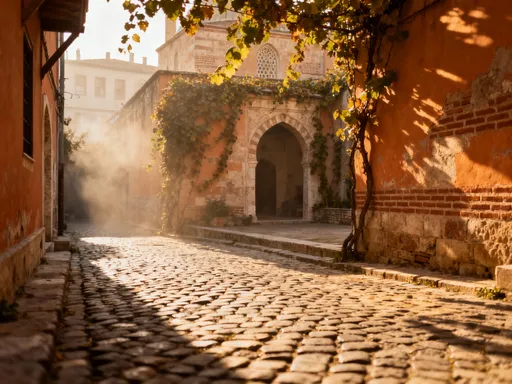
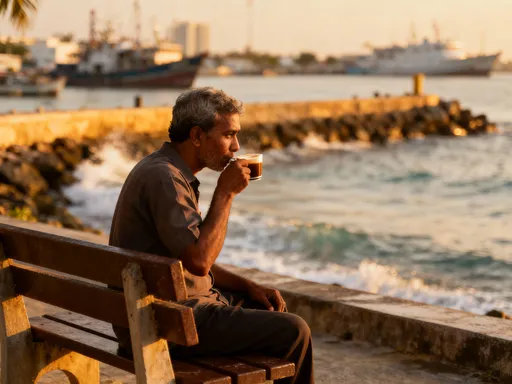
At the heart of Sarajevo’s old town, the Baščaršija quarter pulses with energy, a living marketplace where centuries-old traditions unfold alongside modern creativity. Cobbled lanes wind past copper smiths hammering intricate designs into teapots, tea vendors pouring steaming *sage* or *mountain tea* into delicate glasses, and woodcarvers shaping ornate panels by hand. The scent of roasting coffee and grilled ćevapi lingers in the air, mingling with the sound of call to prayer and the chatter of locals and tourists alike.
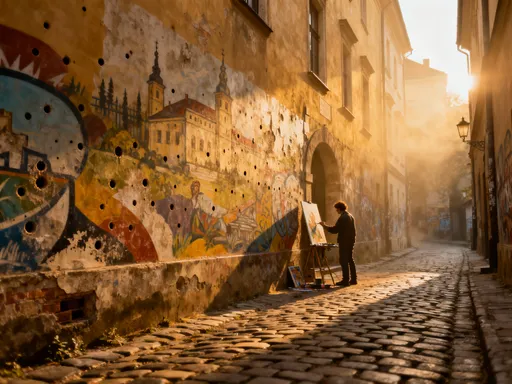
But look beyond the surface, and you’ll find art in unexpected places. Above the archways of old merchant houses, vibrant murals peek through—some depict traditional Bosnian patterns, others feature modern interpretations of folk tales. Near the iconic Sebilj Fountain, young artists sit on low stools, sketching portraits or selling hand-drawn postcards. These aren’t mass-produced souvenirs; they’re personal expressions, often infused with humor, nostalgia, or quiet commentary on city life.
The real magic of Baščaršija lies in this organic collision of old and new. A craftsman might spend days carving a wooden relief using techniques passed down through generations, while just meters away, a teenager spray-paints a stencil of a dancing dervish on a side wall. There’s no tension between them—only coexistence. The city doesn’t force a separation between heritage and innovation; it allows them to breathe together. This is where tradition doesn’t fossilize; it evolves, finding new forms in the hands of those who respect it.
Local initiatives have also begun to support this fusion. Workshops in the quarter now offer visitors the chance to try their hand at copper engraving or Ottoman-style calligraphy, guided by master artisans. At the same time, pop-up art shows in hidden courtyards showcase experimental photography or mixed-media installations. These spaces, tucked behind unmarked doors, are where Sarajevo’s creative soul truly thrives—quiet, unassuming, but deeply alive.
Tunnel of Hope: Art Born from Resilience
Just outside the city center, beneath the airport runway, lies one of Sarajevo’s most powerful symbols—the Tunnel of Hope, or *Tunel Spasa*. Built during the 1992–1996 siege, this narrow underground passage was the city’s lifeline, smuggling in food, medicine, and hope. Today, it stands not only as a historical site but as a canvas of collective memory and artistic expression. The walls leading into the tunnel are covered in murals, handwritten notes, children’s drawings, and photographs—each a personal tribute to survival, loss, and resilience.
The nearby Tunnel Museum, housed in the former home of a family who risked everything to dig the passage, displays handmade tools, wartime diaries, and even a reconstructed section of the tunnel itself. But what strikes visitors most is the emotional weight of the space—the way creativity has transformed a site of desperation into one of remembrance and healing. School groups leave paper cranes; couples pin love letters to the wire fence; artists contribute small sculptures made from war debris. It’s a living memorial, constantly evolving.
What makes this place uniquely artistic is its authenticity. The works here aren’t commissioned or curated by institutions—they emerge organically from visitors and locals alike. A mural near the entrance shows a hand reaching up from the darkness, gripping a sunflower. Another reads *“We were not forgotten”* in three languages. These are not grand statements, but intimate ones—proof that even in the bleakest moments, humans turn to creation to make sense of suffering.
The Tunnel of Hope reminds us that art is not a luxury; it’s a necessity. In times of crisis, it becomes a tool for survival, a way to reclaim dignity and voice. For travelers, visiting this site offers more than historical insight—it fosters deep emotional connection. You don’t just learn about the siege; you feel its echoes in the brushstrokes, the scribbled poems, the silent offerings left by those who carry its memory.
Graffiti Culture Along the Miljacka River
Strolling along the banks of the Miljacka River, you’ll notice a different kind of gallery unfolding—one painted on concrete pillars, under railway bridges, and along the retaining walls. This is Sarajevo’s graffiti corridor, where street art isn’t vandalism but conversation. The works here range from bold political statements to playful folk motifs, from abstract dreamscapes to portraits of local heroes. Unlike the sanitized street art of some European cities, Sarajevo’s is raw, urgent, and deeply personal.
Local collectives like SARTR (Sarajevo Underground Art) have played a key role in shaping this scene. They organize legal spray sessions, collaborate with the city on approved murals, and mentor young artists. Their work challenges social norms, questions authority, and celebrates Bosnian identity. One recurring theme is the blending of traditional patterns—like *džam-dan* geometric designs—with modern typography and surreal imagery. It’s a visual language that honors the past while speaking to the present.
One of the most iconic pieces along the river reads *“Sarajevo Never Sleeps”* in bold Cyrillic script, surrounded by a cascade of stars and gears. It’s not just a slogan; it’s a declaration of endurance. The city, like its art, is restless, always creating, always rebuilding. Another mural depicts a woman weaving the city’s skyline into a traditional textile, a powerful metaphor for how culture and memory are interlaced.
The riverbanks also serve as a platform for youth expression. In neglected underpasses, you’ll find tags and stencils from high school students experimenting with style and voice. Some are fleeting; others become landmarks. The city has increasingly embraced this energy, designating certain zones for legal graffiti and even commissioning artists to revitalize forgotten spaces. This partnership between artists and authorities shows how urban art can be both rebellious and constructive—a force for community pride rather than division.
Austro-Hungarian Elegance Meets Modern Murals
Walk down Ferhadija Street, one of Sarajevo’s main thoroughfares, and you’re surrounded by the elegance of 19th-century Austro-Hungarian architecture. Grand facades with ornate balconies and arched windows have been carefully restored, housing cafes, bookshops, and boutiques. But look up, and you’ll see another layer of the city’s identity—massive murals stretching across upper walls, transforming historic buildings into contemporary canvases.
One of the most striking pieces depicts a woman seated at a loom, weaving the city’s skyline into fabric. Her hands move through threads of minarets, bridges, and tram lines, symbolizing the careful, ongoing work of cultural preservation. The mural, created during the Sarajevo Street Art Festival, is a perfect example of how the city balances reverence for the past with bold artistic innovation. It doesn’t clash with the architecture; it converses with it.
The Sarajevo Street Art Festival, held annually since 2012, has become a cornerstone of the city’s cultural revival. International and local artists are invited to create large-scale works in public spaces, often in collaboration with communities. Themes range from peace and reconciliation to environmental awareness and youth empowerment. These commissioned murals are not just decorative—they’re part of a larger vision to use art as a tool for urban regeneration and social healing.
The contrast between old and new is deliberate and meaningful. Where once these buildings witnessed war and division, they now host messages of unity and hope. A former government office building now bears a mural of children from different backgrounds holding hands, their silhouettes forming a rainbow over the city. Another shows a phoenix rising from the ruins of a bombed theater. These images don’t erase the past; they reimagine it, offering a vision of what Sarajevo can be.
Hidden Courtyards and Artist Ateliers
Beyond the main streets and tourist paths, Sarajevo’s true artistic heartbeat can be found in its hidden courtyards and quiet alleys. Tucked behind unmarked doors in neighborhoods like Cvjetni Trg or near Gazi Husrev-beg Mosque, small studios and ateliers host painters, ceramicists, sculptors, and textile artists. These spaces are rarely advertised; they’re discovered by word of mouth, chance, or the curiosity of a wandering traveler.
In one such courtyard, a potter shapes clay on a foot-powered wheel, using techniques passed down from Ottoman times. The scent of wet earth and wood smoke fills the air. On a nearby table, unfinished pieces dry in the sun—bowls decorated with floral patterns, jugs with coiled snake handles. This isn’t performance for tourists; it’s a daily practice, a way of keeping tradition alive.
Just a few doors down, a young painter opens her studio for a weekend exhibition. Her work blends surrealism with folk symbolism—floating mountains, clocks growing like trees, birds made of letters. She sells prints for a few convertible marks, happy to explain her inspirations to anyone who stops by. These intimate exchanges—artist to viewer, creator to admirer—are at the core of Sarajevo’s art scene.
Some of these spaces have evolved into informal galleries or cultural hubs. The Artist’s Quarter near Ferhadija hosts rotating exhibitions in former homes, while collectives like Kino Bosna organize film screenings and art talks in repurposed buildings. These initiatives are grassroots, often underfunded but full of passion. They prove that art in Sarajevo doesn’t depend on grand institutions—it thrives in the cracks, in the overlooked, in the spaces between.
Why Sarajevo’s Urban Art Matters Beyond Aesthetics
Sarajevo’s urban art is not merely decorative; it is deeply functional. Each mural, sketch, or sculpture serves as a form of dialogue—a way for individuals and communities to process trauma, assert identity, and imagine a shared future. In a city that has experienced deep division, creativity becomes a bridge. It doesn’t erase differences, but it allows people to speak across them.
Consider the role of art in reconciliation. After the war, many neighborhoods remained segregated, divided by memory and mistrust. Public art projects have played a quiet but powerful role in reconnecting these spaces. A mural in Grbavica, once a front-line district, shows two hands—one Muslim, one Orthodox—joining to hold up a dove. It doesn’t claim that wounds are healed, but it suggests that healing is possible.
For younger generations, street art offers a voice. In a region where political discourse can feel stagnant, young artists use walls to ask questions, challenge norms, and express hopes for change. A stencil in a high school courtyard reads *“Why do we learn history if we keep repeating it?”* It’s a simple question, but one that resonates deeply in a city shaped by cycles of conflict and renewal.
Moreover, Sarajevo’s art scene fosters economic resilience. Artisans in Baščaršija, muralists hired for festivals, studio owners offering workshops—these are livelihoods built on creativity. Tourism, too, benefits. Travelers seeking authentic experiences are drawn not just to monuments, but to the living culture of the city. They buy handmade jewelry, attend open studios, take art walks. This demand supports local artists and keeps traditions alive.
But perhaps the most important role of Sarajevo’s urban art is emotional. It allows the city to mourn, to remember, to laugh, to dream. It turns grief into beauty, silence into song. For visitors, it offers a rare depth—a chance to connect not just with a place, but with its soul.
Your Canvas Awaits
Sarajevo doesn’t hand you art—it invites you to discover it. You won’t find it only in museums or galleries, but in the quiet corners, the forgotten walls, the smiles of those who create it. This is a city where every stroll becomes a journey through layers of history, identity, and imagination. The art here doesn’t shout; it whispers. It doesn’t decorate; it heals. It doesn’t just reflect the city—it helps rebuild it.
For travelers seeking authenticity, Sarajevo offers something rare: a place where beauty is earned, not manufactured. Where creativity emerges from resilience, and where every brushstroke carries meaning. Come not just to see, but to feel how a city paints its soul—one mural, one sketch, one handmade cup at a time. And when you leave, you may find that you’ve left a mark too, not in paint or stone, but in memory, in heart, in the quiet understanding that art, at its best, is humanity laid bare.